

You don’t get a low maintenance garden by buying “easy” plants—you get it by matching sun, soil, and climate first, then designing beds and paths that reduce decision-making. You group plants by water needs, lock in weed control with mulch and groundcovers, and automate watering with drip lines and timers. The goal is fewer inputs, fewer corrections, and better consistency. Next, you’ll set up the layout and plant palette that actually holds up.
Plan Your Low Maintenance Garden Around Sun and Time
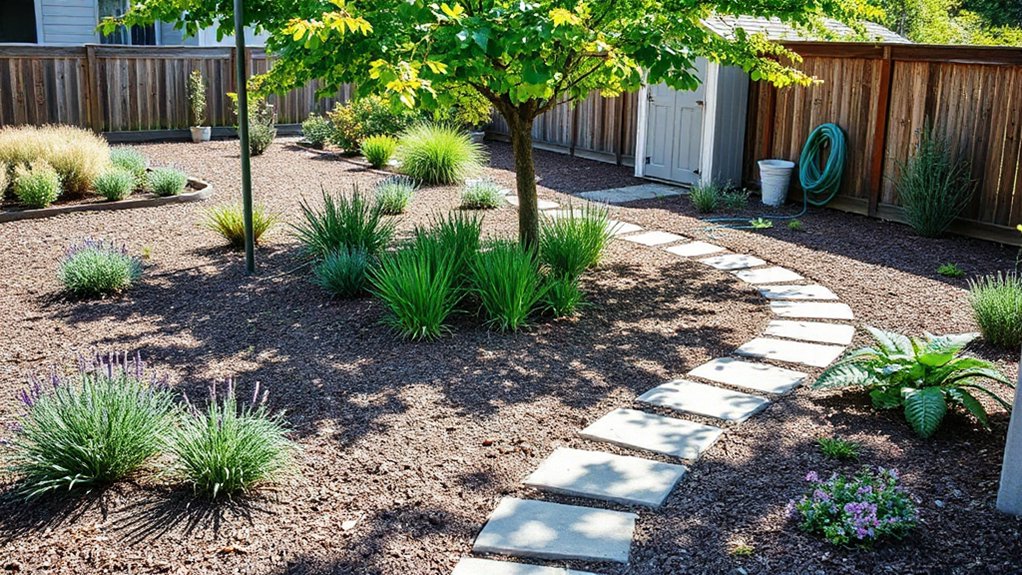
If you want a truly low maintenance garden, start by matching your plant choices and layout to the sun you actually get—and the time you’re realistically willing to spend. Track light for a week, then map Sunlight zones: full sun, part sun, bright shade, deep shade.
Place drought-tolerant performers where heat bakes, and reserve thirstier plants for gentler exposures so you won’t babysit with extra watering.
Next, audit your calendar: if you travel or work late, choose slow-growing, self-sufficient varieties and limit high-input annuals.
Use seasonal timing to your advantage—plant perennials and shrubs in early fall or early spring so roots establish with minimal irrigation.
Schedule one monthly check to prune lightly, refresh mulch, and spot issues early.
Simplify Low Maintenance Garden Beds and Paths
You’ll cut weekly chores fast when you design beds to suppress weeds from day one—think clean edges, tight planting, and a quality mulch or breathable landscape fabric where it makes sense.
Keep bed shapes simple and reachable so you’re not constantly stepping in or reworking soil, which only invites more weeds.
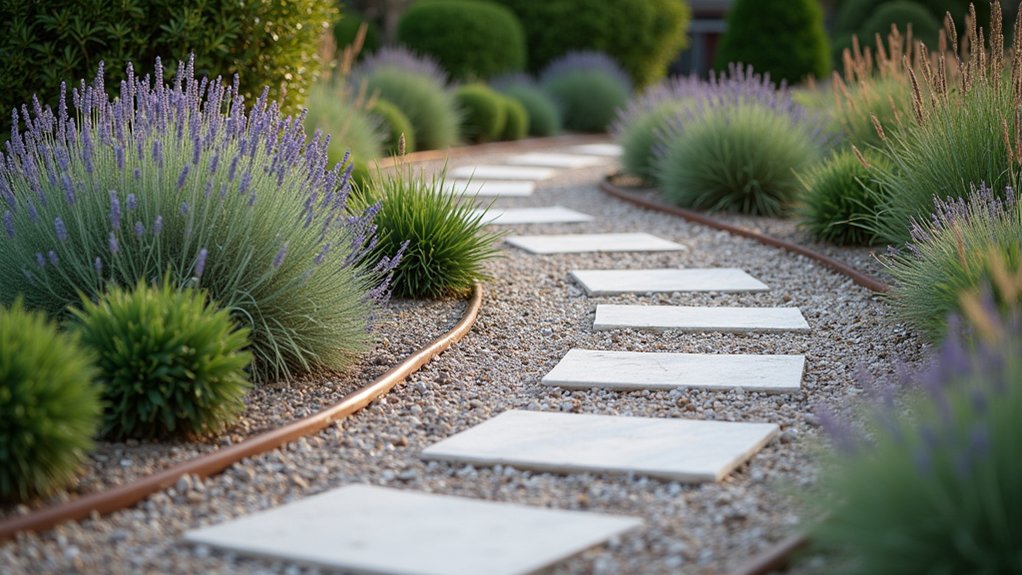
Then lock in low-upkeep flow with durable, on-trend path materials like compacted gravel, pavers, or decomposed granite set on a solid base so they don’t shift, rut, or sprout.
Weed-Suppressing Bed Design
Although weeding will always exist in some form, a weed-suppressing bed design dramatically reduces how often you have to do it by controlling light, edges, and traffic patterns from day one.
You’ll start by widening beds so plants knit together faster, shading soil before weed seeds sprout. Lay overlapped cardboard under 2–3 inches of compost, then top with 2 inches of coarse mulch; refresh seasonally using practical composting tips to keep coverage consistent.
Define crisp, mowable edges or metal edging so runners and creeping grasses can’t invade. Keep a dedicated access strip between plants and edges to prevent trampling and bare soil.
Dense groundcovers and drip zones also support smarter pest control methods by limiting splashing, stress, and habitat for problem insects.
Durable, Low-Upkeep Path Materials
Because paths take the brunt of foot traffic, hoses, and wheelbarrows, choosing durable, low-upkeep materials upfront keeps your beds tidy and cuts ongoing edging, leveling, and weed-pulling.
Start with a compacted 3–4 inch base of crushed stone, then top it with decomposed granite or decorative stones for a clean, modern look that drains fast and resists ruts.
Install steel or aluminum edging to lock lines in place and stop gravel creep.
Skip bark mulch in high-traffic routes; it migrates, decays, and invites weeds.
For hardscape, use large-format concrete pavers or permeable pavers set on a screeded base, not sand alone.
Soften edges with ornamental grasses—they’re on-trend, drought-tough, and hide progressions without trimming.
Choose Low Maintenance Plants for Your Climate
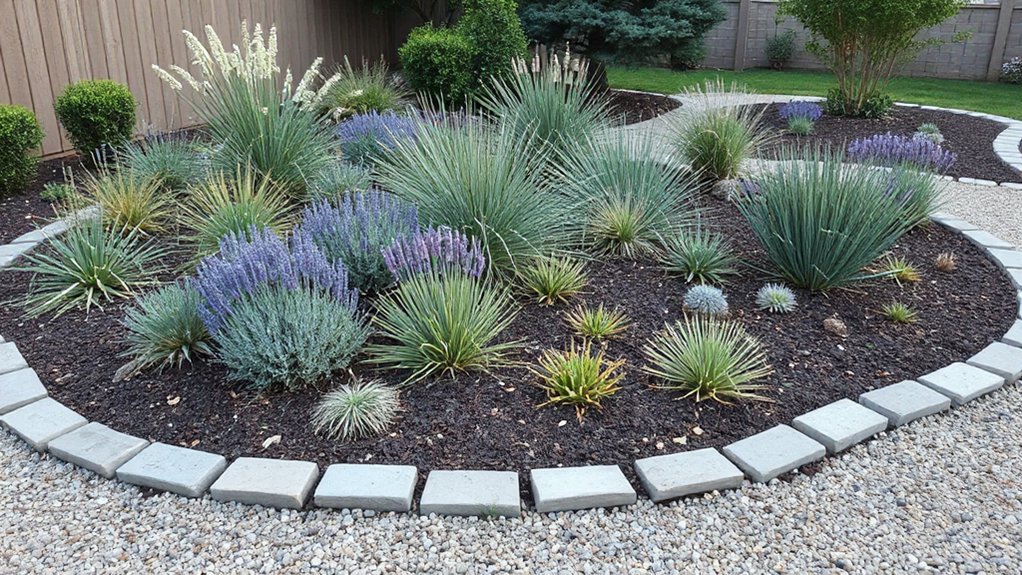
Why fight your yard’s climate when you can let it do the work for you? Start by mapping sun, wind, drainage, and your USDA zone, then match plants to those conditions instead of forcing constant watering and rescue care.
Prioritize Native flora because it’s already adapted to local pests, rainfall patterns, and temperature swings, which cuts spraying and replacement costs.
In hot or water-restricted regions, build your palette around drought tolerant species like sages, yarrow, agave, and lavender, and group plants by water needs so you don’t over-irrigate the tough ones.
Choose modern, compact cultivars that stay tidy without frequent pruning, and select disease-resistant varieties to reduce monitoring.
Aim for perennials and shrubs over fussy annuals for long-term stability.
Mulch and Groundcovers That Keep Weeds Down
Once you’ve matched plants to your climate, lock in that low-effort advantage by covering every inch of bare soil with mulch or a weed-suppressing groundcover. Apply 2–3 inches of arborist chips, shredded bark, or leaf mold, keeping it a few inches off stems to prevent rot and discourage slugs.
Mulch blocks light, so weed seeds fail fast, and it delivers steady soil improvement as it breaks down. For tight spaces, use living carpets like creeping thyme, sedum, ajuga, or native strawberry; they knit a dense canopy that outcompetes weeds and protects soil from splash.
Choose pest-smart options: cedar chips and aromatic groundcovers can support light pest control by reducing habitat and masking cues. Top up annually for consistency.
Set Up Low Maintenance Garden Watering (Drip + Timers)
Mulch and groundcovers handle a big chunk of weed control and moisture retention, but you’ll still get the biggest time savings by automating how water reaches your plants. Install dripline or soaker tubing at the root zone, then lock it in with staples and a thin mulch top-dress to prevent UV damage and shifting. Add a filter and pressure regulator at the spigot so emitters don’t clog or blow off.
Run your garden irrigation in zones: thirsty beds, containers, and new plantings separately from established shrubs. Pair each zone with a battery or Wi‑Fi timer and set a deep, infrequent watering schedule (early morning, 2–3 runs weekly, adjusted for heat and rain). Use a rain sensor to skip cycles automatically.
A 10-Minute Low Maintenance Garden Routine by Season
Even if your beds run on drip and your soil stays covered, a fast seasonal scan keeps small issues from turning into weekend-long cleanups. Set a 10-minute timer, bring pruners, a bucket, and your phone for quick notes.
Spring: pull winter weeds, top up mulch, edge beds for crisp Garden aesthetics, and check emitters for clogs.
Summer: deadhead, spot-water new plants, and scout undersides of leaves; treat early with soap spray for tight Pest control.
Fall: cut back floppy perennials, remove diseased foliage, divide crowded clumps, and refresh mulch before rains.
Winter: prune deciduous shrubs, clear drains, tighten stakes, and wipe tools with alcohol.
Each season, empty the bucket, log fixes, and you’re done.
Conclusion
You’ll get a low maintenance garden by planning around sun, soil, and your real schedule, then simplifying beds with clean edges and durable paths. Choose climate-fit natives and tough perennials, and group plants by water needs. Lock in weed control with mulch and living groundcovers. Automate watering with drip lines and a timer. Then stick to a 10-minute seasonal reset—prune, top up mulch, pull strays—and your garden will practically take care of itself forever.