
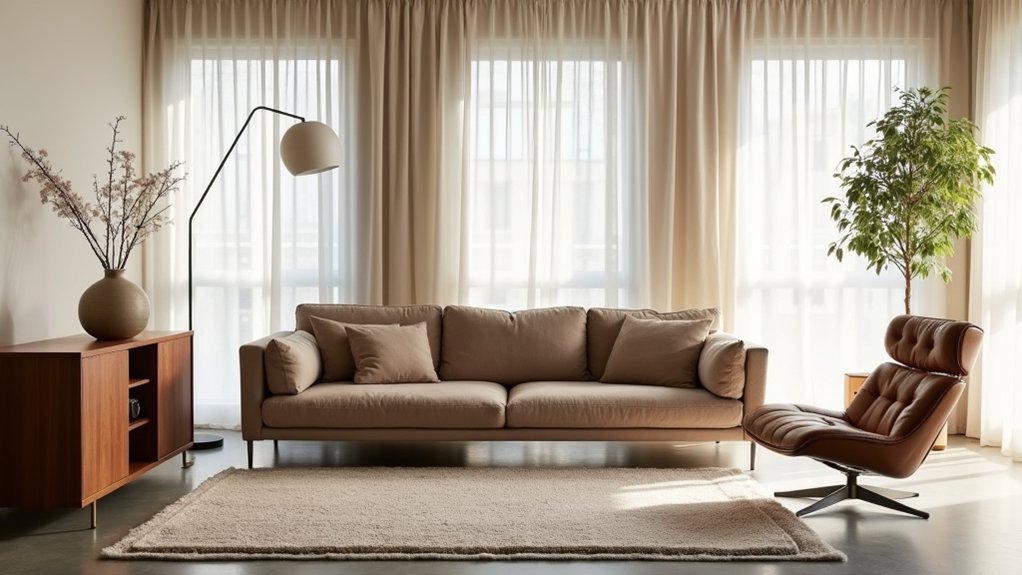

If you’re weighing a $9,000 designer sofa reissue against a cheaper sectional, you’re already asking the right 2026 interior trends question: what holds value when trends move on. You don’t just buy a look now—you buy provenance, repairability, and materials that improve with wear, like solid wood, cast metal, and full-grain leather. The smartest picks also stay liquid because they’re modular and iconic. But the tells are subtle, and most buyers miss them…
How to Spot Investment Furniture in 2026
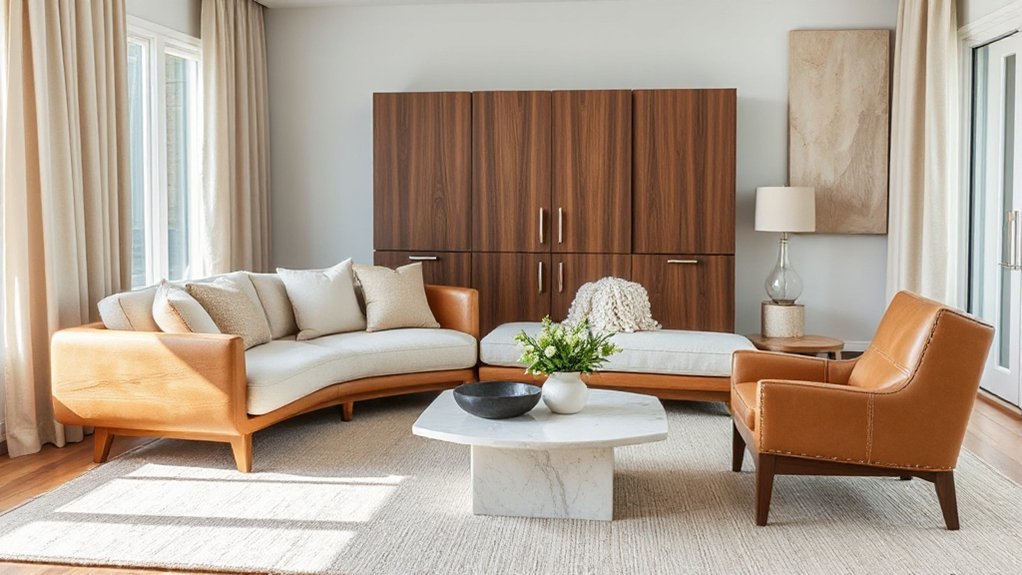
If you’re shopping in 2026 with an investor’s eye, you’ll want to look past “trending” silhouettes and focus on what’ll still hold demand when tastes shift. Start by tracking designer reissues, limited runs, and pieces with documented provenance; they create scarcity buyers can verify.
Favor materials that age visibly well—solid wood, stone, cast metals, full-grain leather—because patina reads like value, not wear. Look for modularity and repairability signals: replaceable parts, published care guides, and brands offering refurbishment, which aligns with a sustainability focus and keeps lifecycle costs low.
Cross-check Vintage resale platforms for stable price floors and quick turnover. Finally, prioritize iconic but livable forms; collectors chase recognizability, but homeowners fund liquidity.
Sofa Buying Checklist: Frames, Cushions, Fabrics (2026)
While sofa styles will keep swinging between cloud-soft curves and tailored modern lines in 2026, your smartest buy comes down to what’s inside.
Start with the frame: kiln-dried hardwood, corner blocks, and reinforced joinery beat stapled softwood every time.
Check springing—eight-way hand-tied is luxe, but sinuous springs with a steel gauge and proper clips can still last.
For cushions, look for high-resilience foam wrapped in down/feather or a plant-based fiber blend; demand zip covers so you can rotate, clean, and re-stuff.
Fabrics should match your life and your Color palettes: solution-dyed performance weave for fades, tightly woven linen blends for texture.
Ask about Sustainable sourcing—certified woods, traceable leathers, low-VOC finishes, and repairable components.
Modular Vs Sectional Seating: What Adapts Best in 2026
As floor plans keep shrinking, expanding, and hybridizing around work-from-home in 2026, your seating needs to move just as easily as your life does. Modular systems win when you need Flexible layouts: you can split a chaise into two armless seats for video calls, add a corner for movie nights, or reconfigure for guests without buying a whole new sofa.
Look for universal connectors, fully upholstered sides, and performance fabrics so every piece can stand alone.
A sectional still makes sense if you crave one anchored, lounge-forward footprint and you rarely rearrange. Choose slimmer arms, higher legs, and tighter depth for Space optimization, plus removable covers for long-term upkeep.
In 2026, adaptability costs more upfront, but saves upgrades later.
Dining Tables to Buy Once (Wood, Stone, Extensions)
Because the dining table gets used harder than almost any other surface in your home—meals, laptops, crafts, and last-minute hosting—it’s the piece you buy for structure first and style second.
In 2026, you’ll get the best lifespan from solid wood with thick aprons, corner blocking, and repairable finishes; it patinas into Vintage charm instead of looking “worn.” If you want stone, choose sintered stone or honed quartzite over polished marble—fewer etch marks, less glare, still elevated.
Pay attention to the base: pedestal styles maximize legroom, while trestles stay stable in long spans. For small spaces, invest in a quality extension mechanism (butterfly leaf, geared slides) that locks flat.
Look for Eco friendly options like FSC wood and low-VOC sealers.
Closed Storage That Looks Custom (Credenzas, Systems)
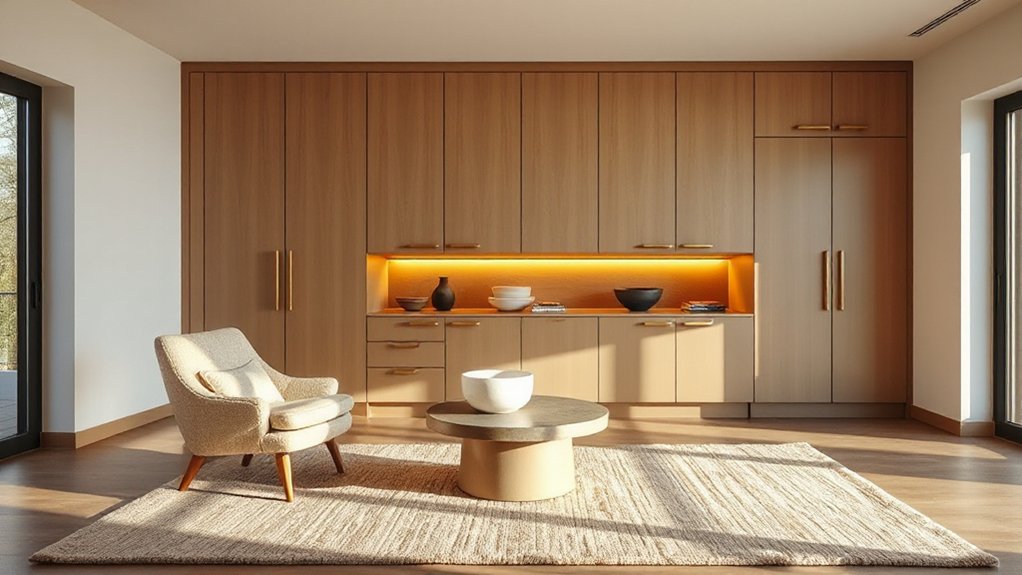
You get a seamless built-in look when you choose closed storage with wall-to-wall proportions, tight reveals, and finishes that match your millwork.
Modular credenza systems let you scale, swap doors and drawers, and reconfigure as your needs change without sacrificing that tailored line.
Hidden hardware—push-latches, integrated pulls, and concealed hinges—keeps the façade clean, so the piece reads custom instead of “off the shelf.”
Seamless Built-In Look
Even if you can’t commit to millwork, closed storage that reads like a built-in delivers the same tailored impact without the renovation. Prioritize long, low profiles that align with baseboards and window lines so the piece “anchors” the wall, not the room.
Look for Integrated cabinetry cues: flush fronts, tight reveals, and continuous toe-kicks that hide shadows and visual breaks.
In 2026, minimalist design isn’t cold—it’s intentional: matte lacquers, light oak, or stone-look tops that quiet the palette while adding tactility.
You’ll get the custom effect by sizing correctly: run the credenza close to wall-to-wall, then float art or a TV centered above for symmetry.
Choose soft-close doors and adjustable interiors; seamless exteriors should still work hard.
Modular Credenza Systems
If your space shifts faster than your floor plan, modular credenza systems deliver that made-to-measure look without locking you into millwork. You can scale storage wall-to-wall, float it under art, or wrap a corner, then rework it when you move or your needs change.
Choose Customizable configurations: mix closed bays for visual calm, drawers for daily catch-alls, and a few open niches to break up massing.
In 2026, the investment angle is longevity through adaptability—standardized units that still read tailored when you align heights, keep tight reveals, and run a continuous top.
Look for deep, matte finishes, warm oak or walnut tones, and low-sheen lacquer for aesthetic versatility across minimal, Japandi, and elevated traditional rooms.
Hidden Hardware Detailing
While open shelving cycles in and out of favor, hidden hardware keeps closed storage looking truly custom by stripping away visual noise and letting proportions do the work. You’ll see 2026 credenzas and modular systems lean on push-latch doors, integrated pulls, and finger-groove reveals that read like architecture, not furniture.
Hidden hardware also improves longevity: fewer protrusions to snag, fewer finishes to chip, and cleaner sightlines that won’t date quickly.
To make it feel intentional, pair the quiet face with subtle detailing accents—shadow lines, eased edges, or a contrasting toe-kick that floats the volume. Specify consistent reveal widths across doors and drawers, and align seams with wall paneling or flooring grids.
You’ll get storage that disappears, yet feels premium and built-in.
2026 Materials That Age Well (Leather, Performance Fabric, Wood)
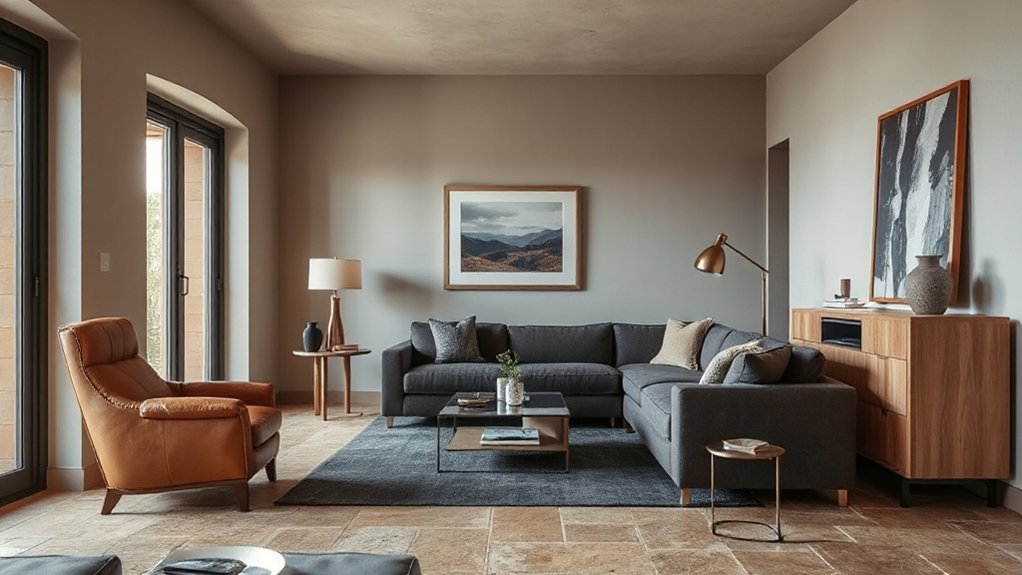
Because 2026 buyers treat furniture less like decor and more like a long-term asset, material choice has become the make-or-break factor in what still looks sharp after years of real life. To invest well, you’ll chase Sustainable materials that develop character, not damage, and you’ll lean into the Vintage revival without buying fragile originals.
Choose full-grain or top-grain aniline leather if you want patina; avoid corrected grain if you hate peeling.
For families, pick performance fabric with solution-dyed fibers and a tight weave—it resists UV fade, stains, and pilling.
On wood, prioritize solid oak, walnut, or ash with repairable oil or hardwax finishes; skip thick lacquer that chips.
Ask for FSC-certified frames, kiln-dried joinery, and removable covers so you can refresh, not replace.
Conclusion
You don’t invest in furniture by chasing what’s loud; you do it by choosing what endures. You’ve checked the frame joinery, the foam density, and the fabric’s abrasion rating. You’ve picked modular pieces you can reconfigure, repair, and resell, and tables that won’t flinch at heat or time. Now the suspenseful part: the real payoff won’t show this year. It appears in five—when patina reads like provenance.