
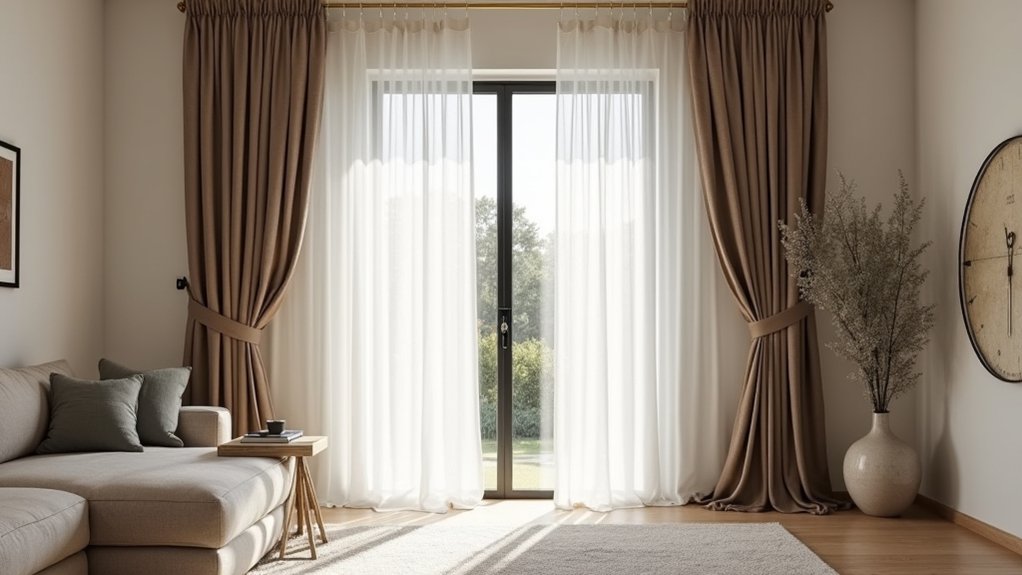

Most people spend about 90% of their time indoors, so your window treatment choices impact daily comfort more than you think. You can upgrade a room fast by layering sheers with heavier panels, mounting rods higher and wider to fake larger windows, and choosing floor-length curtains for a tailored line. Add textured fabric, a palette-matching color, and upgraded rings or finials for a custom finish. Next, you’ll want to match each move to your light and privacy needs…
Curtain Ideas Based on Light, Privacy, and Vibe
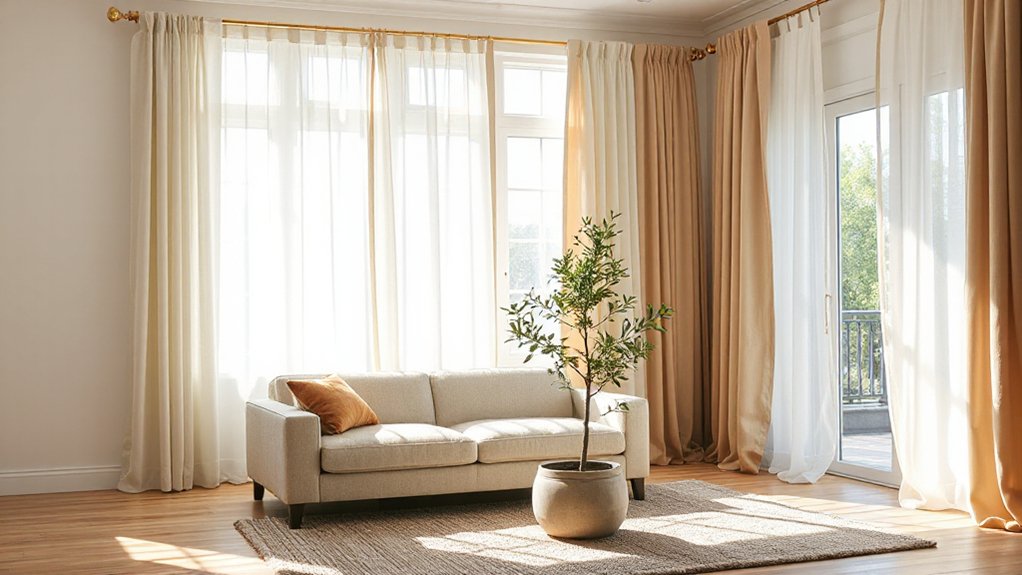
If you start by deciding how much light and privacy you actually need, you’ll choose curtains that look intentional instead of improvised.
For bright rooms, prioritize light-filtering panels you can stack wide, so daylight stays soft while sightlines stay controlled. For bedrooms or street-facing windows, pair lined curtains with a close-fitting rod and return brackets to reduce side gaps.
Match the vibe by adjusting scale and hardware. Hang rods 4–6 inches above the frame and extend them 6–10 inches past each side to make windows feel larger.
Follow Window treatment trends by keeping pleats clean, hem lengths precise, and hardware finishes consistent.
If you’re on a budget, upgrade with DIY curtain projects: add clip rings for easier drape or sew simple header tape.
Curtain Fabric Ideas: Sheer, Linen, Blackout
Although color and pattern grab attention first, fabric choice determines how your curtains handle light, hang on the rod, and perform day to day.
Start your Fabrics selection with sheers if you want softened daylight and a brighter room; choose tighter weaves for more privacy without losing glow.
Pick linen when you want relaxed structure and breathable coverage; its natural slubs add depth, and it drapes best with a lining to reduce wrinkling and sun fade.
Choose blackout fabric when you need real light control for bedrooms, media rooms, or street-facing windows; look for foam-backed or triple-weave options and sealed seams to prevent edge bleed.
Balance Texture options by pairing airy sheers with heavier side panels for flexibility and polish.
Curtain Hanging Ideas: Mount Higher for Height
Mount your curtain rod close to the ceiling—just a few inches below the crown or ceiling line—to make the room read taller.
Extend the rod and panels past the window frame on both sides so the glass looks wider and you don’t block light when they’re open.
Keep your curtains floor-length (or just kissing the floor) to maintain a clean vertical line that boosts height.
Raise Rod Near Ceiling
When you hang your curtain rod just a few inches below the ceiling line (or right under crown molding), you instantly make the room feel taller and more intentional. This simple rod placement draws the eye up, maximizing perceived ceiling height without any renovation.
Start by locating studs and marking level brackets; you don’t want a high-mounted rod to sag. Choose sturdy hardware, especially for heavier fabrics, and use proper anchors if studs aren’t available.
Keep the rod parallel to the ceiling, not the window frame, so the line reads clean. If you’ve got uneven ceilings or old plaster, measure from the ceiling at multiple points before drilling.
Finally, confirm your panel length reaches the floor once the rod moves up. That finish looks custom.
Extend Panels Past Window
Even if your window sits in a tight wall section, you can make it look wider by extending your curtain panels 6–12 inches past each side of the frame. When you open them, the glass stays mostly uncovered, so you get more light and a cleaner sightline.
Use a rod that’s longer than the casing and place brackets far enough out that the stack-back clears the trim. Choose panels with enough width to still look full when closed, and keep the leading edges aligned so they don’t drift inward.
This setup also improves window insulation because fabric overlaps the wall, reducing side drafts.
For curtain maintenance, you’ll vacuum edges regularly and use sturdy rings so panels glide without snagging.
Keep Curtains Floor-Length
Why stop at the sill when floor-length curtains instantly make a room look taller and more finished? Mount your rod 6–10 inches above the window frame, or just below the crown molding, then hang panels that kiss the floor. This creates Floor length elegance and draws the eye up, boosting perceived ceiling height.
Measure from the rod to the floor and choose the closest standard length; don’t “make it work” with short hems. Aim for a 1/4-inch break or a clean hover just above the floor if you vacuum often.
Use ring clips or adjustable hooks to fine-tune height across uneven floors. For Seamless drapery, ensure each panel is wide enough to close fully without looking stretched or skimpy.
Curtain Width Ideas: Go Wider for Fullness
Make your curtains look richer by extending the rod 6–12 inches beyond each side of the window frame so the panels can stack clear of the glass.
For true fullness, you’ll use curtain fabric that’s 2x–3x the window (or rod) width, not a skimpy 1:1 match. That extra width builds deeper folds, improves light control, and makes the whole wall read more finished.
Extend Beyond Window Frame
One simple width adjustment can dramatically upgrade how your curtains look and how your room feels: extend the rod well beyond the window frame. You’ll make the glass read larger, reduce visual clutter, and let panels stack off the window so daylight isn’t blocked when they’re open.
Use this with most window treatment types, from sheer panels to lined drapes, and you’ll get a cleaner, more tailored silhouette. For reliable results, mount the rod 8–12 inches past each side of the frame (more if wall space allows) and keep brackets level and securely anchored.
Choose rings or grommets that glide easily, then test the full open position to confirm the fabric clears the trim and outlets.
Choose 2x–3x Fabric Width
After you’ve extended the rod beyond the window frame, build on that upgraded scale by choosing enough fabric width for real fullness. Aim for panels totaling 2x the rod width for a tailored look, or 2.5x–3x for rich, hotel-level drape. Measure the rod’s full span (including returns), then buy or sew widths to match—don’t guess off window size alone.
Pick fullness that suits your fabric texture: crisp linen needs more width to avoid looking flat, while heavy velvet can look plush at 2x. Use proper header style (pinch pleat, ripplefold, or rings) to distribute gathers evenly.
More fabric also supports Curtain maintenance—panels hang straighter, resist edge curl, and tolerate steaming between cleanings.
Curtain Rod and Ring Upgrades That Look Custom
Because your curtains rely on their hardware as much as the fabric, upgrading the rod and rings can instantly push the whole setup into “custom” territory. Start with a thicker rod (1–1¼ inch) so panels hang straighter and brackets don’t bow. Mount it 4–6 inches above the frame and extend 8–12 inches past each side to clear the glass when open.
Choose Custom hardware with matching finish across brackets, finials, and rings for a tailored look. Swap clip rings for drapery rings with pins to control pleats and keep hems level.
Add Curtain accessories like French return brackets to block light leaks, or a center support for spans over 60 inches. Finally, use felt-lined rings or nylon slides so you’ll open and close panels smoothly.
Curtain Color Ideas to Match Your Palette
Custom-looking rods and rings set the structure, but curtain color determines whether the whole window treatment blends in or becomes a focal point.
Start by sampling your room’s dominant undertone—warm (cream, tan, brass) or cool (gray, white, chrome)—then pick curtains in the same temperature for an effortless match.
Use Color psychology strategically: soft blues and greens calm bedrooms, warm neutrals steady living areas, and deeper charcoals add sophistication without darkening if you choose a light-filtering weave.
If you want contrast, jump one to two shades darker than your wall color to frame the window cleanly.
For flexibility, lean on seasonal palettes: airy flax or white in spring/summer, richer taupe or slate in fall/winter, then keep hardware constant.
Patterned Curtain Ideas That Won’t Feel Busy
Even if you love bold prints, you can keep patterned curtains from overwhelming a room by controlling scale, contrast, and repetition. Start with one dominant motif, then choose solids elsewhere so your eye has resting points.
If your rug or sofa already carries pattern, pick curtains in a larger, looser repeat to avoid visual static.
Use Pattern mixing with a strict limit: two patterns max, tied by one shared color. Keep contrast moderate—tone-on-tone geometrics read calmer than high-contrast florals.
Add Texture contrast to soften busy prints: pair crisp patterned fabric with matte walls, nubby upholstery, or natural wood.
Finally, repeat the curtain’s accent color in two small places—pillows and a vase—to make the pattern feel intentional, not loud.
Layered Curtain Ideas for Day-to-Night Control
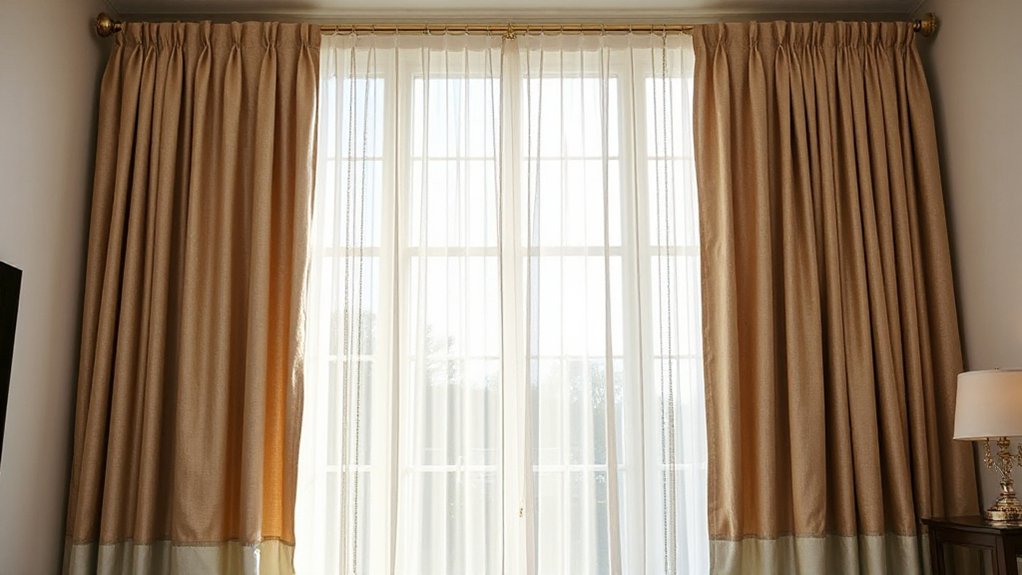
When you need a room to shift from bright and open to private and dark on demand, layered curtains give you the cleanest day-to-night control without changing hardware. Start with a sheer or light-filtering panel closest to the glass for daylight filtering that softens glare while keeping your view.
Add a heavier drape on the room side to block light, reduce drafts, and sharpen the finished look.
Mount both on a double rod or a track system so you can stack each layer fully. Choose matching header styles for a tidy line, and keep the sheer slightly longer to hide the inner rod.
For bedrooms, pair blackout-lined drapes with textured sheers; for living rooms, use linen-look sheers and medium-weight panels for flexible layered window treatments.
Conclusion
You’ve seen how the right curtains can work like a well-tailored suit—quietly shaping the whole room. Hang rods higher and wider, and you’ll borrow height and add fullness, like a classic stage reveal. Layer sheers with linen or blackout panels to fine-tune light and privacy from dawn to late-night. Upgrade rings and finials for a custom finish, then echo your palette or a restrained pattern so the window becomes the focal point.