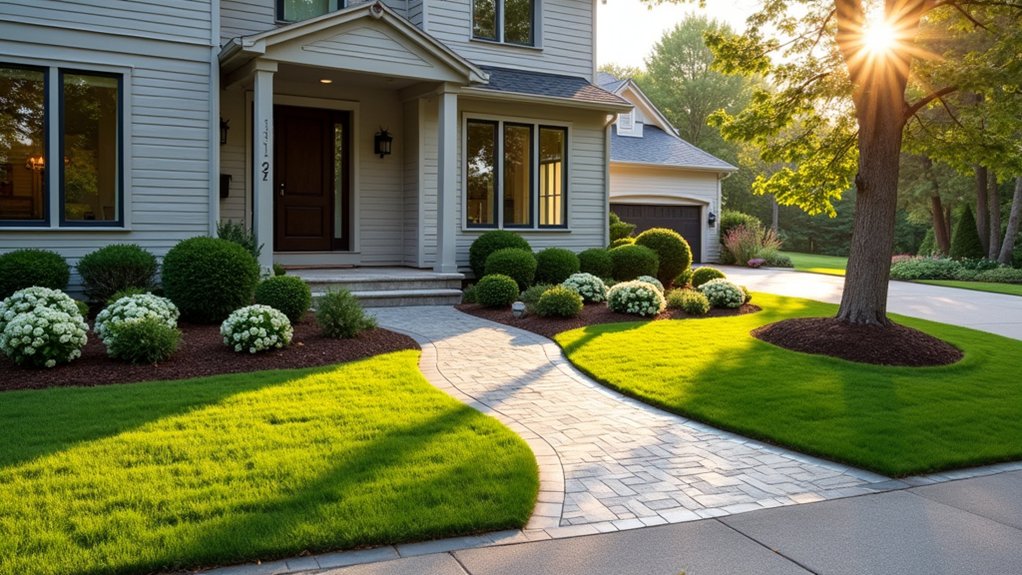

If you want curb appeal that feels intentional, start with upgrades that give you the biggest visual return for your budget. You can sharpen bed lines, refresh mulch, and add layered plantings that look good in every season. Then you’ll tighten up the walkway with cohesive borders and introduce low-glare lighting for a safer, more finished entry. The challenge is choosing what to tackle first—and what you can skip without it showing.
Choose Landscaping Upgrades by Cost and Impact
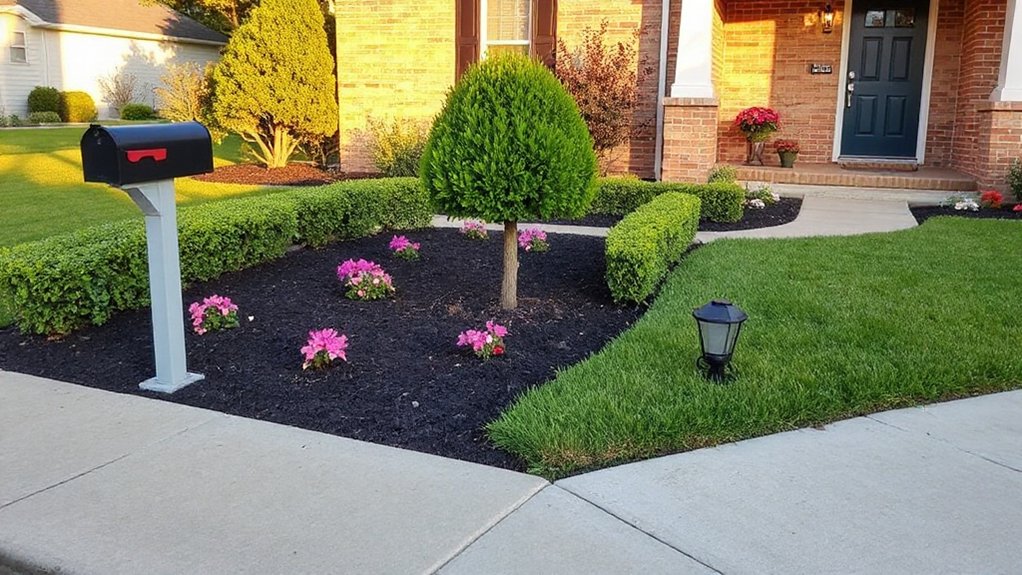
Because landscaping budgets can disappear fast, you’ll get better results by prioritizing upgrades based on both price and visual payoff. Start with a quick walk-around and list what’s most visible from the street: entry path, front door zone, and driveway edges. Then rank projects by “noticeability per dollar” so you don’t overspend on low-return fixes.
Choose Budget friendly options like repainting or staining the front door, swapping dated house numbers, updating mailbox hardware, or adding solar path lights for instant evening presence.
For High impact enhancements, invest in a modern walkway refresh, simple exterior lighting, or a cohesive plant palette that matches your home’s style. Keep materials consistent, limit colors, and buy in standard sizes to reduce waste and labor costs.
Refresh Garden Beds With Mulch and Crisp Edging
Start by choosing the right mulch for your climate and style—think shredded bark for a clean, modern look or composted mulch for rich, natural beds.
Then you’ll create crisp bed edges with a sharp spade or edging tool so lines stay clean and grass won’t creep in.
Finish by topping up mulch to a consistent depth and scheduling quick touch-ups through the season to keep beds looking freshly installed.
Choose The Right Mulch
Why does mulch make a garden bed look instantly more polished? It unifies color, hides bare soil, and signals intentional maintenance.
Choose mulch by function first: shredded hardwood for a natural, modern look that stays put on slopes; pine bark nuggets for drainage in shrub beds; and composted mulch blends when you want a darker, trend-forward finish.
Keep depth at 2–3 inches so roots breathe, weeds get shaded, and moisture stays consistent with your irrigation system.
Pull mulch a few inches back from trunks and stems to prevent rot and improve garden pest control.
Refresh high-traffic front beds annually, but top-dress lightly midseason instead of piling on.
Match mulch tone to your home’s exterior for cohesive curb appeal.
Create Clean Bed Edges
Even if you’ve chosen the perfect mulch, sloppy borders can make the whole bed look unfinished. Define a crisp line first: lay a garden hose to sketch the curve, then cut a shallow trench with an edging spade for a sharp “V” profile. This modern, sculpted look reads intentional and instantly boosts curb appeal.
To keep mulch where it belongs, set the edge 1–2 inches below turf grade and rake mulch back from the cut so the line stays visible.
For high-traffic lawns, install steel or aluminum edging; it’s thin, trend-forward, and nearly disappears. Avoid bulky plastic that heaves over time.
Clean edges also simplify garden bed maintenance by giving you a clear mowing and trimming boundary while protecting soil health from turf encroachment.
Refresh And Maintain Beds
Once you’ve cut a clean edge, refresh the entire bed so it looks newly installed instead of merely “touched up.” Pull any weeds, rake out matted or decomposed mulch, and top-dress with a fresh 1–2 inch layer, keeping it a few inches back from plant crowns and tree trunks.
Then sharpen the outline again with a spade or half-moon edger so the mulch line reads crisp from the street. For garden bed maintenance, check drip lines, remove fallen leaves, and reset any shifted stones or metal edging.
Choose a mulch color that complements your home’s exterior—dark brown and black are popular for a modern look. Finally, plan seasonal planting in clusters: swap tired annuals for fresh color at the front, and prune perennials to keep sightlines clean.
Plant Curb Appeal Color With Layered Heights
Although a single row of flowers can brighten a yard, you’ll get far more curb appeal when you layer color by height—tall shrubs or ornamental grasses in back, mid-height perennials in the middle, and low edging plants up front.
Aim for Color harmony by repeating two to three main hues and adding one accent shade for seasonal punch. Keep it trend-aware with drought-tough blooms, like salvia, coneflower, and gaura, paired with structured evergreens for year-round form.
Choose foliage contrasts—silver, burgundy, chartreuse—to make flowers pop even between bloom cycles. Plant in drifts of odd numbers so the design reads intentional from the street.
Leave breathing room for mature sizes, and you’ll avoid a crowded, high-maintenance look later.
Define the Front Walkway and Entry Borders
To sharpen your curb appeal, you’ll want to define the front walkway and entry borders with durable edging materials like steel, brick, or composite that won’t shift over time.
Shape the walkway lines clearly—clean curves or crisp straight runs—so your route reads intentional and modern.
Then frame the entry with structured plantings that guide the eye to the door and soften hard edges without crowding the path.
Choose Durable Edging Materials
If your front walkway and entry borders look unfinished, durable edging materials can give them a crisp, intentional outline while keeping mulch, gravel, and soil where they belong. Pick options that match your home’s style and can handle your climate without shifting, cracking, or corroding.
For a clean, modern look, steel or aluminum edging installs neatly and resists rot, but you’ll want coated finishes near salty roads.
Concrete or stone delivers a premium feel and long service life, though it costs more and takes more labor.
Brick offers classic charm, yet it needs a solid base to prevent heaving.
Recycled composite is a trend-forward choice with low maintenance.
Weigh durability considerations like freeze-thaw cycles, UV exposure, and weed pressure before you buy.
Shape Walkway Lines Clearly
Once you’ve chosen edging that’ll hold up, shape the walkway lines so the entry reads intentional from the curb. Snap a chalk line to check straight runs, or use a garden hose to refine curves until they feel smooth and purposeful. Keep widths consistent, and tighten radii at turns so the path doesn’t look like it’s drifting.
Cut a crisp trench and reset edging so the top sits level with adjacent surfaces; it prevents trip hazards and makes mowing clean. Maintain a slight crown or slope to shed water away from the walk and toward drainage.
Add low, warm garden lighting along the border to highlight the line at night without glare. With regular lawn maintenance—string-trimming, re-cutting edges, and clearing debris—you’ll preserve that sharp, high-end outline year-round.
Frame Entry With Plantings
Where your walkway meets the front door, plantings should act like a clean frame—guiding the eye, softening hard edges, and reinforcing the path’s shape. Keep borders crisp with a consistent edge: steel, brick, or tight mulch lines that match your walkway material.
For entryway framing, use a simple hierarchy—low groundcovers at the edge, mid-height shrubs behind, and one vertical accent near the stoop, like a dwarf conifer or columnar grass. Repeat plants on both sides to create symmetry without looking formal.
Choose seasonal plantings in containers or pockets near the steps so you can refresh color fast: bulbs in spring, annuals in summer, mums in fall, and evergreen boughs in winter.
Leave clear sightlines and a 36-inch walkway buffer.
Add Outdoor Lighting for Safer Nighttime Curb Appeal
Although landscaping looks its best in daylight, well-planned outdoor lighting lets your curb appeal—and your sense of safety—carry through after dark. Start by highlighting key features with warm, downward-facing fixtures that reduce glare and protect neighbors’ sightlines.
Line walkways with solar pathway lights for an easy, wire-free upgrade that looks polished and guides guests to your door. Add motion sensors near the garage, side gate, and dark corners so you deter trespassers while saving energy.
Keep the look cohesive by matching finishes and color temperature across fixtures, and avoid overly bright bulbs that wash out your home’s details. Use timers or smart controls to automate dusk-to-dawn settings, so your exterior always looks cared for and secure.
Add Easy Hardscape Touches (Pots, Stone, Borders)
If you want a fast curb-appeal boost without committing to a full patio or new walkway, add a few hardscape touches that create clean lines and intentional “rooms” outdoors. Start by edging beds with steel, brick, or pavers to sharpen curves and keep mulch contained.
Then layer Decorative stone accents—like a river-rock strip along the foundation or a gravel apron around the mailbox—for a modern, low-profile finish.
Use three to five matching containers for Garden pot arrangements, varying height but keeping one consistent color to look cohesive. Place pots in pairs at the steps or cluster them near the entry to frame the door.
Finally, cap it off with a simple border around trees for a tailored look.
Keep Curb Appeal Landscaping Looking Fresh Weekly
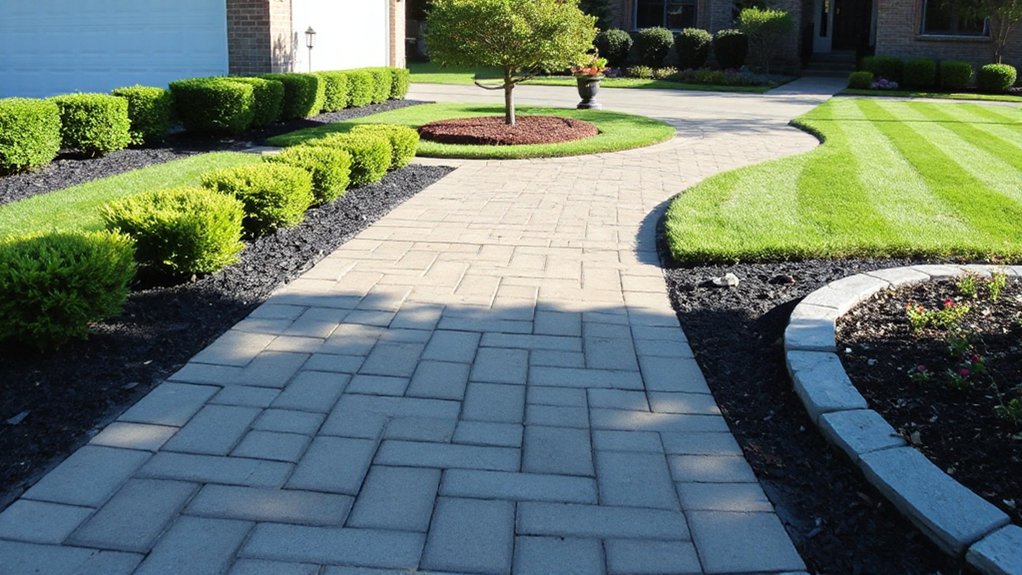
Those clean borders, stone strips, and pot groupings look best when you keep them sharp with a quick weekly reset. Walk the front yard with a bucket and gloves, pull fresh weeds, and edge along beds and sidewalks to restore crisp lines. Sweep mulch or gravel back into place, rinse hardscape splashes, and deadhead blooms so containers stay photo-ready.
Check irrigation heads for clogs and adjust timers to match heat and rainfall trends. Spend five minutes scouting pests and yellowing leaves, then spot-treat early.
Reserve deeper tasks for the right moment: Seasonal pruning keeps shrubs from swallowing windows, and Lawn aeration in spring or fall revives thinning turf.
Finish by clearing the entry path and wiping the mailbox for a polished look.
Conclusion
Choose upgrades that give you the biggest visual payoff for your budget, then keep the look cohesive. Fresh mulch and sharp edging instantly tidy beds, while layered plantings add modern color and structure. Define your walkway with clean borders and durable materials, and install subtle lighting to guide guests safely at night. Finish with a few on-trend pots or stone accents. Stay on top of weekly touch-ups—because curb appeal is the cherry on top.