
You can ruin an apartment faster than you can unpack a single box. If you don’t measure furniture scale, you’ll choke walkways and block doors. If you rely on one ceiling light, every corner stays flat and dim. If you skip built-in storage, clutter wins by week two. If you shop without a clear style, the room looks mismatched. If you choose fragile finishes, you’ll pay for it—so start with the one decision that prevents most of these mistakes…
Measure Apartment Furniture Scale Before You Buy
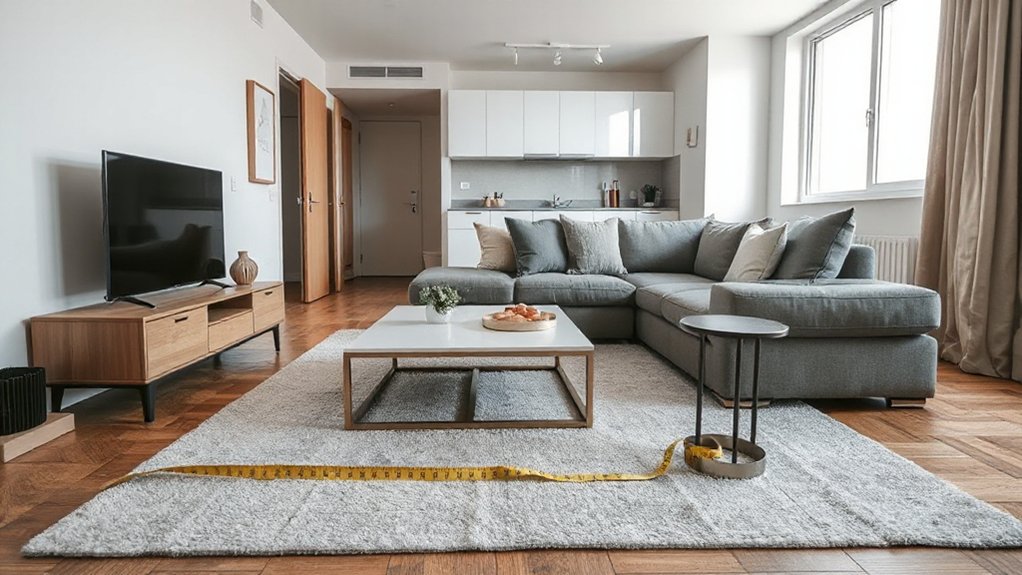
One oversized piece can throw off your entire apartment layout, so measure furniture scale before you buy. Start with a tape measure and record the room’s length and width, plus ceiling height for tall bookcases.
Then check each item’s overall dimensions and key clearances: sofa depth, arm height, table overhang, and drawer pull-out distance.
Confirm Furniture proportions by comparing piece size to wall spans and to neighboring items; a large sectional can dwarf a slim media console, while a chunky coffee table can crowd a petite sofa.
Use Space planning tools: mark footprints with painter’s tape or cardboard, and verify sightlines around focal points.
If a piece can’t fit comfortably on paper, don’t gamble in-store. Measure twice, buy once.
Plan Apartment Layout: Protect Doors and Walkways
Even if your furniture fits the room on paper, a bad layout can still sabotage daily life by blocking doors and pinching walkways. Start by mapping every door swing, drawer pull, and cabinet opening, then reserve door clearance so nothing collides.
Keep at least 30–36 inches for primary paths from entry to kitchen, bath, and bedroom to maintain walkway safety. Don’t park sofas or beds where you’ll sidestep corners; align them parallel to traffic flow.
Use rugs to define zones without narrowing routes, and avoid placing stools where you’ll brush past them. If a space feels tight, swap a coffee table for nesting tables or an ottoman, and choose wall-mounted storage to clear floor space.
Layer Apartment Lighting (Not Just the Ceiling Light)
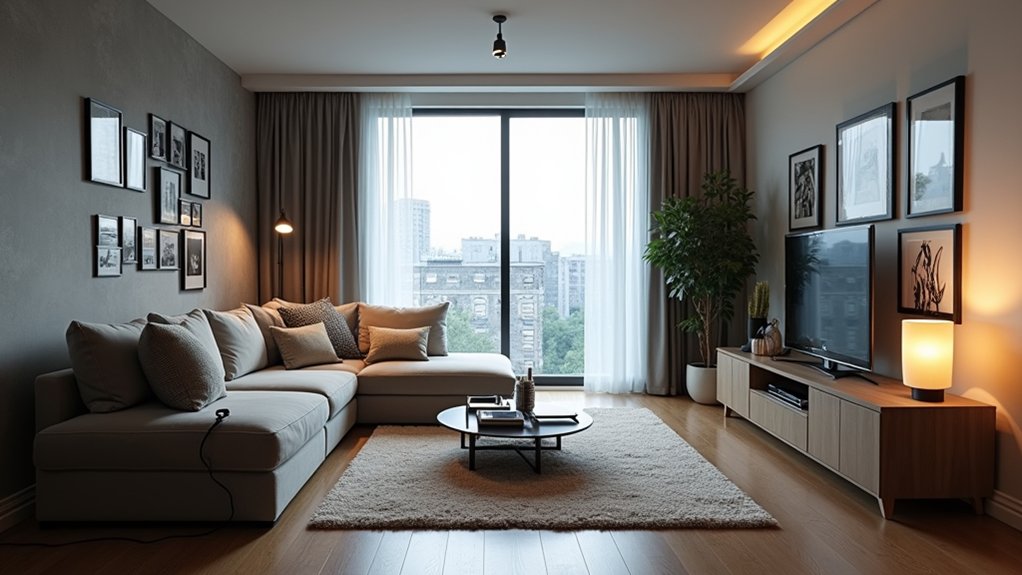
If you rely on a single ceiling fixture, your apartment will feel flat and you’ll struggle to light specific zones.
Combine ambient, task, and accent lighting, and set up multiple light levels with dimmers or multi-bulb fixtures so you can adjust for work, meals, and downtime.
Place floor lamps, table lamps, and plug-in sconces at seating areas, bedside, and along dark corners to eliminate shadows and define the layout.
Combine Ambient Task Accent
Because most apartments rely on a single overhead fixture, you’ll end up with harsh shadows, flat corners, and a room that never feels quite finished unless you layer your lighting.
Start with ambient lighting: add a floor lamp or shaded table lamp to spread an even glow across seating areas.
Next, handle tasks with purpose—place an adjustable desk lamp at your work surface, a focused reading light by the sofa, and under-cabinet lights where you prep food.
Finish with accent decor lighting that guides the eye: aim a small spotlight at art, tuck an LED strip behind a headboard, or use a picture light over a gallery wall.
Keep each fixture close to what it serves, and your layout will feel intentional and polished.
Use Multiple Light Levels
A single ceiling light can’t give your apartment the control and comfort you need throughout the day, so build in multiple light levels you can adjust on demand. Put your overhead on a dimmer or use smart bulbs so you can shift from bright cleaning mode to low Mood lighting at night.
Choose warmer color temperatures (2700–3000K) for evenings, and cooler, higher-output settings for morning focus. Add separate switching so you’re not stuck with all-or-nothing brightness.
During the day, maximize natural illumination with sheer window treatments and reflective surfaces, then match your artificial light to avoid harsh contrast.
Set scenes in your app or with a remote to change intensity fast. This prevents glare, reduces eye strain, and makes small rooms feel calmer and more flexible.
Place Lamps Strategically
Even with dimmable overheads, you’ll still get flatter light and harsher shadows unless you place lamps where you actually live and work. Put a floor lamp beside the sofa to light faces, pages, and snacks without glare. Add a table lamp on a sideboard to create Ambient glow that makes the room feel deeper and calmer.
For task illumination, aim light at the job: a swing-arm lamp at your desk, an adjustable sconce over the reading chair, under-cabinet LEDs in the kitchen. Keep bulb color consistent (2700–3000K) so the apartment doesn’t look patchy.
Set lamps on separate switches or smart plugs, and group them into “Evening,” “Work,” and “Clean-up” scenes. Place cords along walls, not across walkways.
Build Apartment Storage Into Every Zone Early
When you plan storage from the start, every zone in your apartment can work harder without feeling cramped. Built-in storage and early planning prevent last-minute clutter solutions that steal walking space. Map what each area must hold—shoes by the entry, linens near the bath, files by the desk—then size cabinets, shelves, and hooks accordingly.
Use vertical capacity: stackable closet systems, wall rails in the kitchen, and high shelves over doors. Choose beds with drawers, ottomans that open, and banquettes with lift-up seats to store bulky items.
Keep frequently used items between waist and eye level, and assign a “drop zone” tray for keys and mail. You’ll maintain clear surfaces and faster routines.
Set a Cohesive Apartment Style Before Shopping
Before you buy a single piece, lock in a cohesive style direction so your apartment doesn’t turn into a mix-and-match of “good deals” that never feels finished. Pick one clear lane—modern, Scandinavian, traditional, industrial—and define it with a tight palette and repeatable materials.
Create Color coordination by choosing one dominant neutral, one secondary tone, and one accent, then stick to them across rugs, art, and textiles. Save inspiration images and note common shapes, leg styles, and finishes so every purchase supports the same visual language.
Measure your rooms and sketch furniture placement before shopping; you’ll avoid buying pieces that block pathways, fight sightlines, or overwhelm the scale. When you edit choices upfront, your apartment looks intentional, not accidental.
Use Durable, Renter-Friendly Apartment Finishes and Fabrics
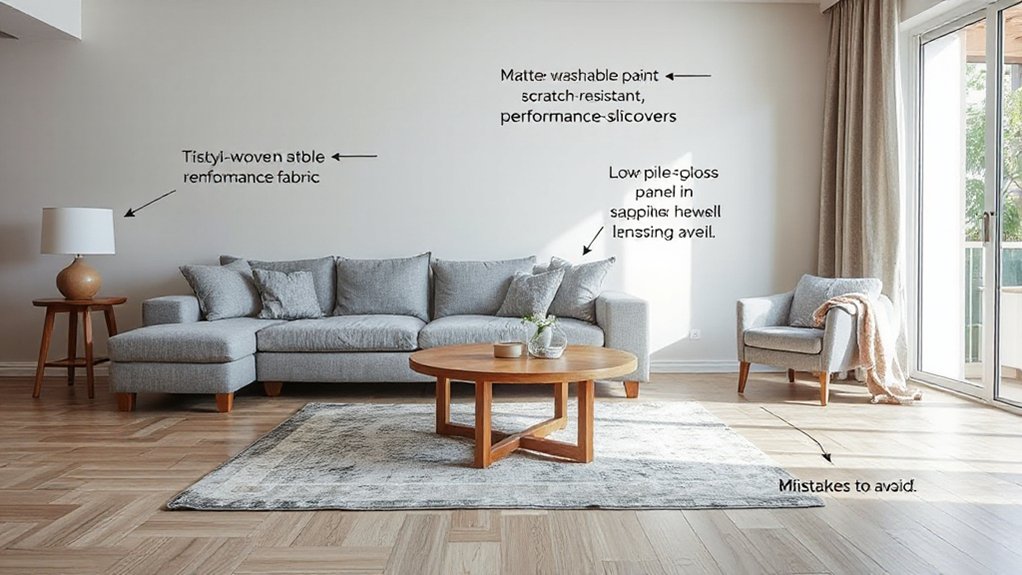
You can’t afford fragile finishes in a rental, so choose washable, stain-resistant textiles for sofas, rugs, and bedding to handle real life.
Use damage-free wall solutions—removable wallpaper, peel-and-stick tiles, and no-drill hanging systems—so you won’t lose your deposit.
Prioritize scratch-resistant surfaces like sealed wood, laminate, or quartz-look tops, and add felt pads and protective runners where wear happens fastest.
Choose Washable, Stain-Resistant Textiles
Even if your layout and color palette look perfect, fussy fabrics can turn daily living into constant damage control. Choose stain resistant textiles and washable fabrics so spills, pets, and guests don’t dictate your design.
Prioritize performance upholstery, solution-dyed acrylic, microfiber, and tight weaves that resist snagging and pilling. For rugs, pick low-pile, indoor/outdoor styles or washable cotton blends with non-slip pads.
Read care labels before you buy: look for machine-washable covers, zip-off cushions, and colorfast dyes.
Keep a small “maintenance kit” handy—enzyme cleaner, lint roller, and fabric protectant approved for the fiber.
If you love linen or velvet, use them as removable pillow covers, not high-wear seating. Your apartment stays polished without constant replacements.
Install Damage-Free Wall Finishes
Washable textiles keep furniture looking sharp, but scuffed paint and nail holes can still make an apartment feel worn fast. For wall protection, choose removable solutions that won’t risk your deposit. Use peel-and-stick wallpaper or decals rated for clean removal, and test a small patch behind a door first.
Hang art with adhesive picture strips, not nails, and keep extra tabs on hand for heavier frames. Add a thin, removable chair rail or wainscot panels secured with command-style fasteners where backpacks and chairs tend to hit.
For damage prevention near entries, place a narrow console with a tray so keys don’t gouge walls. Keep matching touch-up paint and a putty-free spackle pen for quick fixes.
Prioritize Scratch-Resistant Surfaces
Because everyday drag marks and pet claws show up faster than stains, prioritize scratch-resistant surfaces and fabrics before you buy anything decorative. Choose scratch resistant flooring like luxury vinyl plank, sealed laminate, or porcelain tile, and add felt pads under every chair and table to prevent gouges.
Skip soft pine and high-gloss lacquer; pick powder-coated metal, performance upholstery, and tightly woven rugs that won’t snag.
For countertops, avoid marble and soft butcher block unless you’ll baby them. Quartz, porcelain slab, or quality laminate handles dings and cleans fast.
Build countertop maintenance into your routine: use cutting boards, don’t drag appliances, wipe grit immediately, and keep a mild cleaner handy. You’ll protect your deposit and keep the place looking new longer.
Conclusion
Funny how the biggest apartment “problems” show up the day your sofa arrives: it’s an inch too deep, the door won’t swing, and the only light is that harsh ceiling fixture. You can avoid that coincidence by measuring first, mapping clear walkways, and layering task, ambient, and accent lighting. Build storage into every zone, lock in a cohesive style before buying, and choose durable, renter-friendly finishes so your space stays functional and polished.