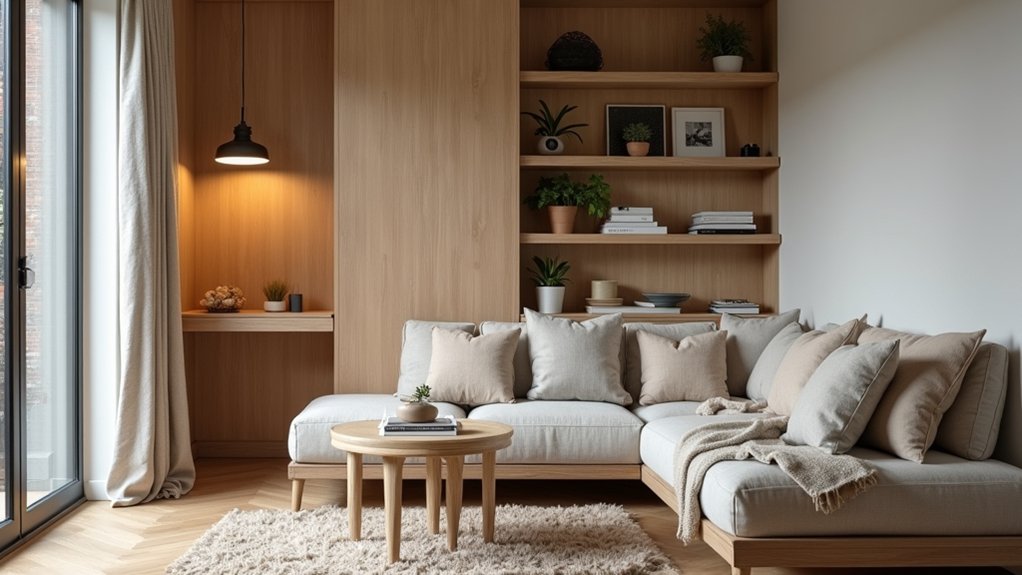

Like a well-packed carry-on, your compact home works best when every inch earns its keep. You’ll feel more comfortable when you plan around your daily flow, keep high-use items within reach, and choose furniture that stores, folds, or shifts roles. Layer your lighting, lean on light colors, and add texture without adding bulk. The big change comes when you start hiding storage in plain sight—and that’s where most layouts quietly fall apart…
Plan Your Small Space Around Flow and Function
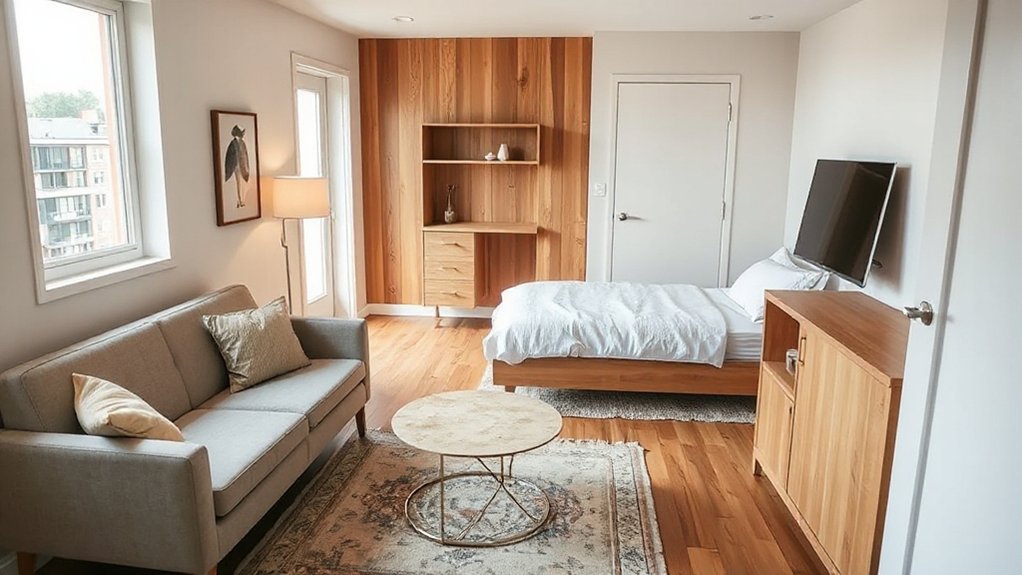
If your compact home feels cramped, start by mapping how you actually move through it each day. Trace paths from entry to kitchen, desk, bed, and bath, then clear pinch points by shifting furniture a few inches or rotating pieces to open a straight walkway.
Keep high-use items within arm’s reach, and store rarely used gear higher or deeper.
Next, prioritize function: choose one surface for daily drop-offs, one for prep, and one for work, and keep them uncluttered with trays or slim organizers.
Use consistent color schemes to reduce visual noise, and repeat a few decorative accents—like matching hardware, a single metal finish, or coordinated textiles—so the room feels intentional.
Confirm doors and drawers swing freely, then lock the layout in.
Create Zones in a Compact Space: No Walls
Because most compact homes have to do double duty, you’ll get more comfort by carving out clear zones without adding walls. Start by defining what happens where: sleep, work, eat, relax. Use open concept zones by changing what’s underfoot—one rug for lounging, a bare floor path for circulation—so your brain reads boundaries fast.
Let furniture arrangement do the heavy lifting. Angle your sofa to face the “living” area, not the whole room, and leave a straight walkway behind it. Align a desk or console parallel to a wall to signal “work,” then keep cables, chargers, and supplies contained to that zone.
Create a visual stop with a tall plant, curtain panel, or open shelving, and aim lighting to each zone so tasks feel separate.
Choose Compact Furniture That Does Double Duty
Even when your floor plan can’t grow, your furniture can do more than one job. Choose a storage ottoman that serves as a footrest, extra seat, and hidden bin for throws or cables. Swap a bulky coffee table for a lift-top model so you can eat, work, and stash remotes inside.
Pick a sleeper sofa with built-in drawers, or a daybed that doubles as a lounge and guest spot. Use nesting tables when you need surfaces, then tuck them away.
Look for wall-mounted drop-leaf desks that fold flat after emails. Add multifunctional decor like benches with cubbies and mirrors with shelves.
Finish with space-saving accessories—under-bed boxes, over-door hooks, and slim rolling carts—so every inch earns its keep.
Add Lighting That Makes a Small Room Feel Bigger
When you layer light instead of relying on a single overhead fixture, a compact room instantly feels taller, wider, and less boxed in.
Start with an Ambient glow: use a plug-in wall sconce, a slim floor lamp tucked behind a chair, or LED strips along a shelf to wash light upward and soften corners.
Add task lights where you work—an adjustable desk lamp or under-cabinet bar—so you don’t overbrighten the whole room.
Then use Accent lighting to create depth: aim a small spotlight at art, a plant, or a textured wall, and place it near the room’s far edge to pull your eye outward.
Put everything on dimmers or smart plugs, and route cords with adhesive clips for a clean, spacious look.
Use Light Colors and Cozy Textures Strategically
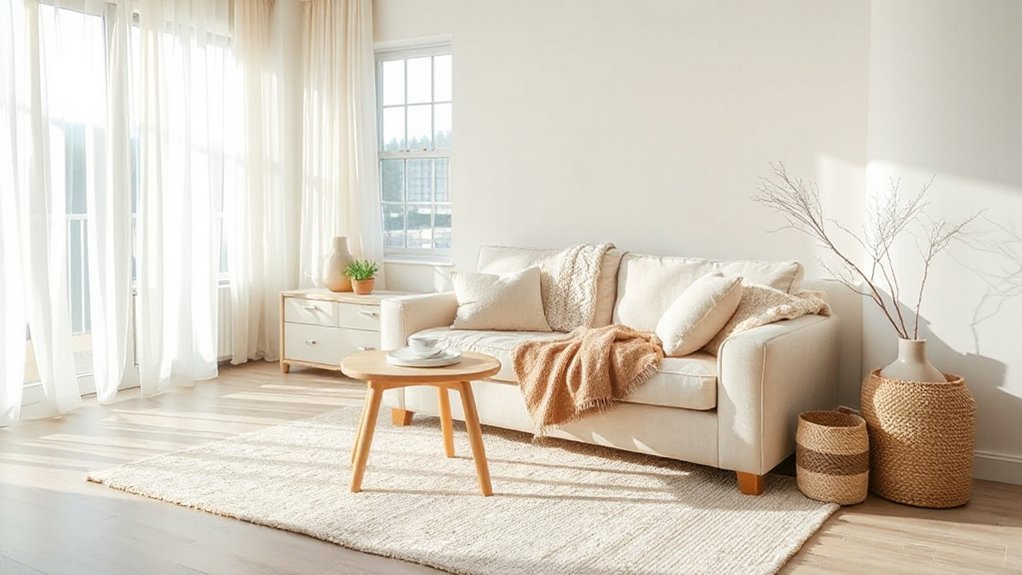
If you choose light colors as your baseline, you’ll make the room feel more open without changing the footprint. Paint walls in warm white or pale greige, then match trim to reduce hard edges.
Keep large pieces—sofa, bed, curtains—within the same light range for Color harmony, and use one darker accent only where you want focus.
Add comfort with Texture layering, not extra items. Choose a flatweave rug under a plush throw, or linen curtains with a knit blanket.
Mix matte and soft-sheen finishes to avoid a sterile look. Repeat two textures across zones so the room feels intentional.
Stick to three core tones, then vary fibers and weaves for depth without crowding the space.
Add Hidden Storage Without Visual Clutter
You can add storage without crowding your sightlines by building wall niches that sit flush and keep daily items corralled.
You’ll reclaim floor space with an under-bed drawer system sized to your bed frame, so linens and off-season clothes stay accessible but out of view.
You can also choose furniture with concealed compartments—ottomans, benches, and lift-top tables—to stash clutter where you already sit and work.
Built-In Wall Niches
Where can extra storage hide without making a small room feel busier? Build wall niches between studs to tuck essentials into the wall plane. Place them near entries for keys and mail, beside the sofa for remotes, or in the shower for bottles.
Keep depth around 3–4 inches for most rooms, and frame edges cleanly so the opening looks intentional, not improvised. Add a lip or shallow rail to stop items from tipping.
Use doors or sliding panels when you need privacy, but match paint to the wall so they disappear.
Choose Decorative accents sparingly: one vase, a stack of books, or a small tray. Let Material choices do the work—tile, wood trim, or plaster for durability and cohesion.
Under-Bed Drawer Systems
How do you add real storage in a tight bedroom without adding another visible piece of furniture? Install under-bed drawer systems that glide out smoothly and disappear when closed. Measure your bed’s clearance first, then choose low-profile drawers on casters or rails so they don’t snag on rugs.
Keep under bed storage clean by lining drawers and adding felt pads to reduce dust gaps. For drawer organization, assign each drawer a category: off-season clothes, extra linens, gym gear, or cables. Use shallow dividers or zip pouches so items don’t shift when you pull the drawer.
Label the drawer fronts on the inside edge for fast access without visual clutter. Leave one drawer empty for overflow so you don’t jam everything.
Furniture With Concealed Compartments
Under-bed drawers handle the low zone, but hidden-compartment furniture lets the rest of the room pull double duty without adding visual noise. Choose a coffee table with a lift-top to stash remotes, chargers, and mail while keeping the surface clear.
Add an ottoman with a hinged lid for blankets and out-of-season pillows, and pick benches with flip-up seats near the entry for shoes and bags.
Convertible beds with built-in cabinets or side cubbies keep linens close without extra nightstands, and they’re easier to live with than bulky dressers.
Modular sofas often hide storage under chaises or in arm consoles; use those zones for books, games, and spare cables.
Measure clearances for lids and slides, and label bins so you don’t dig.
Avoid These Small-Space Layout Mistakes
Even if you’ve mastered decluttering, a few layout missteps can still make a compact room feel tight and hard to use. Don’t block pathways with floating furniture; anchor seating to one side and keep a clear 30–36-inch corridor. Avoid pushing everything to the walls if it creates dead zones—pull key pieces forward to define zones, then use a slim console or shelf behind.
Skip oversized rugs and tiny ones alike; choose a rug that tucks under front legs to unify the area.
Watch Color psychology: light, warm neutrals expand perceived space, while high-contrast walls chop it up.
Respect Cultural influences in seating height and gathering patterns so your layout matches how you actually host.
Finally, don’t ignore vertical space—mount lighting and shelves to free floors.
Conclusion
When you plan around flow, carve out clear zones, and pick furniture that works twice as hard, your compact space starts working for you. Layer lighting to lift corners, lean on light colors to open the room, and add cozy textures for warmth without bulk. Tuck storage into beds, benches, and built-ins so clutter stays out of sight. Small space, big comfort: you don’t need more square footage—you need smarter square footage.