
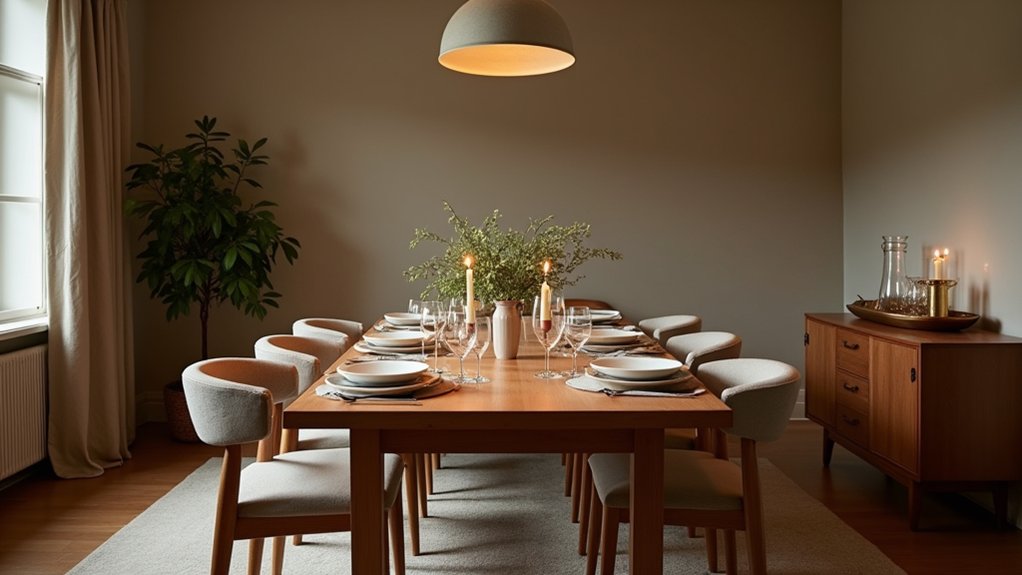

You make a dining room feel inviting by controlling the mood: layer dimmable overhead light with warm lamps, then add a small candle glow. Choose seating you’ll actually linger in—upholstery, curved backs, mixed chairs with a shared wood tone. Clear the traffic path, soften hard surfaces with a rug and textured linens, and keep the palette warm. The finishing move is a simple centerpiece and a personal object that sparks talk—but only if you place it right…
Layer Lighting for an Inviting Dining Room
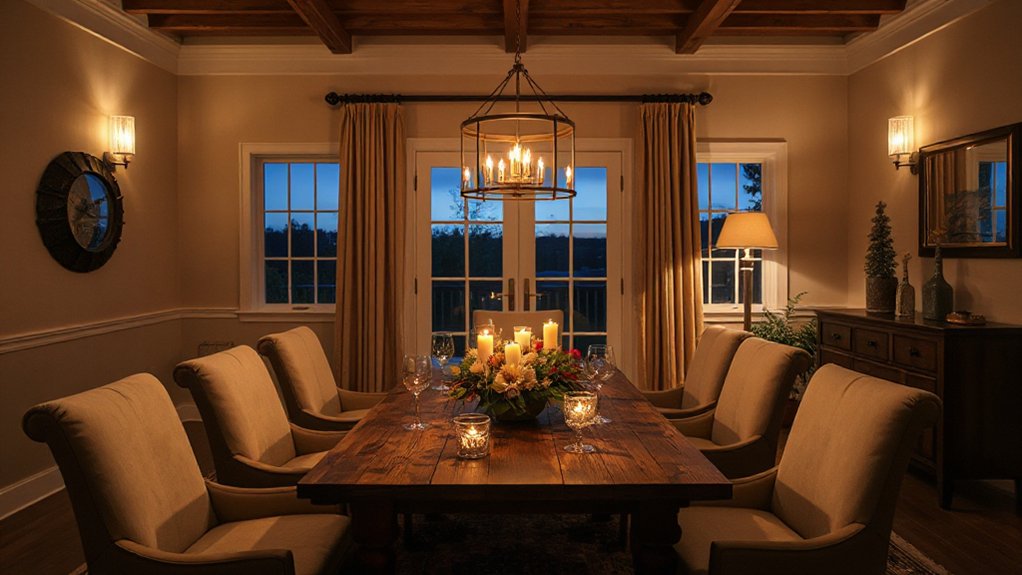
If your dining room feels a bit flat once the sun goes down, layered lighting fixes it fast by balancing function and atmosphere. Start with a dimmable ceiling fixture centered over the table to set an even ambient glow; choose a warm 2700K–3000K bulb for flattering skin tones and food.
Add task lighting with a pair of wall sconces or a slim picture light aimed at artwork or a sideboard, so serving and cleanup feel effortless. Then build depth with accent sources: a small table lamp on a console or LED strips under a shelf to lift shadows.
Put each layer on separate switches or smart dimmers, and you’ll dial in weekday brightness or dinner-party intimacy in seconds.
Pick Comfy Dining Room Seating
You can’t make a dining room feel inviting if the seating looks great but feels stiff, so start with cushioned chairs that support long, lingering meals.
Keep the look current by mixing seating styles—upholstered side chairs with a sleek bench or a pair of statement host chairs—to add depth without clutter.
Finish with warm textures like bouclé, linen blends, or soft leather to make every seat feel welcoming and lived-in.
Prioritize Cushioned Chairs
While a statement table can anchor the room, cushioned chairs do the real work of making your dining space feel inviting by keeping guests comfortable long after the plates are cleared.
Choose Cushioned chairs with supportive seat foam (high-resiliency, medium-firm) and a gently contoured back so posture stays relaxed through long dinners.
Prioritize Upholstered seating in performance fabric or top-grain leather to handle spills, then look for tight tailoring and clean welts—details that read current, not bulky.
Aim for a seat height around 18 inches and leave 10–12 inches between seats for elbow room.
If you host often, add chairs with arms at the ends for a subtle, hospitality-forward cue.
Keep slipcovers tailored for a crisp finish.
Mix Seating Styles
Because matching chair sets can read stiff and showroom-perfect, mixing seating styles instantly makes a dining room feel lived-in—and still intentional—when you keep comfort as the through-line.
Start with two anchor end chairs that offer strong back support and arms, then vary the side chairs for an Eclectic mix without sacrificing sit quality.
Keep seat height consistent (within about 1/2 inch) so everyone lands at the same dining level, and match proportions so slimmer chairs don’t disappear beside chunky ones.
Repeat one unifier—finish, silhouette curve, or upholstery color—to prevent visual chaos.
Work in Vintage charm with a pair of restored spindle-backs or wishbones, but test for wobble, seat depth, and edge comfort.
If a chair pinches, it doesn’t earn a spot.
Add Warm Textures
Even if the table and chairs fit the room, a dining space can still feel chilly without warm textures that invite people to linger. Start by upgrading seating: choose upholstered chairs with performance fabric, or add seat cushions in bouclé, velvet, or brushed linen for a current, tactile look.
If you’ve got a bench, layer it with a slim lumbar pillow to soften the line without crowding the table.
Anchor the setup with plush area rugs sized so chairs stay on the pile when pulled out; wool or low-loop blends handle crumbs and sliding better. Keep cozy throw blankets draped over a nearby side chair or basket for after-dinner lounging.
Finish with matte ceramics and wood-grain accents to balance shine.
Fix the Dining Room Layout for Easy Flow
If your dining room feels cramped or awkward, the layout—not the décor—is usually the culprit. Start with space optimization: measure the room, table, and clearances, then commit to a purposeful furniture arrangement. You need 36 inches for main walkways; 42–48 inches is better where people pass behind seated diners. Center the table on the room’s sightline, not necessarily the chandelier, and keep chair pull-back zones unobstructed.
Choose the right scale: in tight rooms, a round or oval table eases circulation; in long rooms, a rectangle aligns with traffic. Float a sideboard only if it doesn’t choke paths—wall-hugging storage is the current, cleaner look.
Finally, define entry-to-seat routes so guests never sidestep corners.
Add Texture for a Cozy Dining Room
Add texture to your dining room by layering natural textiles—think linen runners, boucle cushions, and a flatweave rug—to soften hard surfaces and absorb echo.
Then mix warm wood accents like oak chairs, a walnut sideboard, or a reclaimed-wood centerpiece to build depth and visual warmth.
When you balance these tactile layers, the room feels instantly cozier and more current.
Layer Natural Textiles
A dining room feels instantly warmer when you layer natural textiles that invite touch and soften hard surfaces. Start with a flatweave or jute rug under the table to ground the layout and reduce echo.
Add linen or cotton drapery to diffuse daylight and visually widen the room without blocking it.
For Textile layering that looks intentional, mix weaves, not patterns: a nubby runner, smooth napkins, and lightly slubbed upholstery on seat cushions.
Prioritize Natural fibers—linen, cotton, wool, and hemp—because they age well, regulate temperature, and read elevated in today’s relaxed-luxury trend.
Keep a tight palette so texture does the work, then finish with a washable throw on a bench or chair back for effortless comfort.
Mix Warm Wood Accents
Natural textiles soften the room, but warm wood accents give your dining space the depth and tactility that makes it feel truly welcoming. Mix tones intentionally: pair a walnut table with oak chairs, or add a maple sideboard to balance darker cabinetry. Keep the palette cohesive by repeating one dominant undertone—golden, reddish, or smoky—across your wood finishes.
Add rustic charm with small-scale pieces that read curated, not themed: a turned-wood bowl, a vintage cutting board as art, or a bench with visible grain. Contrast matters, so combine matte and satin sheens to avoid a flat look.
If you’ve got metal lighting, choose aged brass or blackened steel to complement the warmth without competing.
Choose Warm Colors That Welcome Guests
Because color sets the emotional temperature of a room in seconds, you’ll make your dining space instantly more inviting by leaning into warm, welcoming hues. Use Color psychology to guide choices: terracotta, clay, cinnamon, and muted ochre read social and grounding, while warm whites with creamy undertones keep things bright without feeling sterile.
If you want a modern edge, try dusty blush or caramel-tinted greige; both are on-trend and pair effortlessly with warm wood accents. Evaluate paint options by undertone and finish—eggshell softens light and hides minor wall flaws better than flat, while satin wipes clean after meals.
Test large swatches at eye level and under evening bulbs, since warm lighting can push reds too intense.
Style an Everyday Dining Table Centerpiece
Even if you only dress the table once a week, an everyday centerpiece makes the whole dining room feel finished without getting in the way of plates and conversation. Start with a low profile: a shallow bowl, a short stack of books, or a compact tray that keeps items corralled.
Anchor it with one of today’s most versatile table runners—washed linen, tonal stripes, or a subtle texture—so the vignette reads intentional, not cluttered. Keep height under 10 inches and scale to the table: one focal piece for small tables, three clustered elements for longer ones.
For flower arrangements, choose tight, single-variety stems or grocery greenery in a squat vase; refresh water midweek. Add a taper pair or tea lights for soft, dinner-ready glow.
Add Personal Decor That Starts Conversations
Once your table centerpiece looks polished, give the room a point of view with personal decor that sparks real conversation. Choose two or three personal mementos that reveal something specific: a framed menu from a milestone trip, a small ceramic from a local studio, or black-and-white family photos in matching mats. Keep them edited and intentional, not crowded.
Place conversation starters where guests naturally pause: a vintage matchbook collection on a sideboard, a photo book on the console, or a sculptural object near the bar cart. Add a short label card if the story isn’t obvious.
Stick to one cohesive material mix—warm woods, aged brass, or matte ceramics—so the room feels curated. Rotate pieces seasonally, and you’ll keep the space fresh without redecorating.
Conclusion
When you layer dimmable lighting, you set the mood like a conductor cueing a warm, intimate score. You’ll keep guests lingering with comfy, well-scaled seating, a layout that flows, and tactile finishes—linen, wood grain, and woven accents. Stick to welcoming warm tones, then anchor the table with an everyday centerpiece—greenery, candles, or seasonal stems. Finally, add personal pieces that spark stories. Your dining room won’t just look inviting—it’ll feel lived-in.