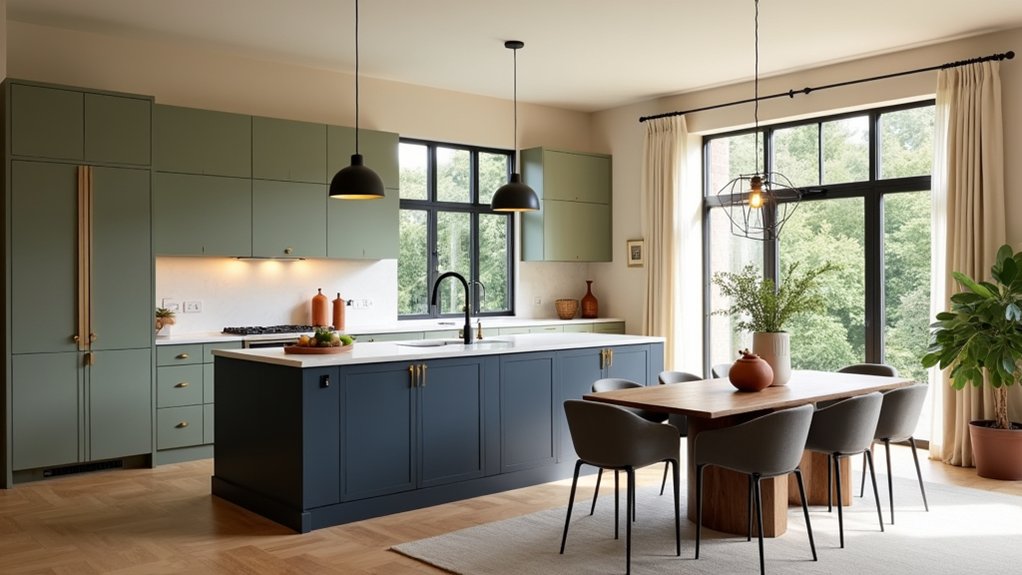

You’re choosing kitchen and dining room colours that have to work hard: they need to feel bright in the morning, flattering at night, and cohesive from one space to the next. Start with warm neutrals for flexibility, then layer in greens or blues for depth without dating the room. Balance everything with wood tones, warm metals, and the right lighting. The key is knowing which shades stay timeless—and which ones quietly fight your finishes.
How to Choose Kitchen and Dining Room Colours (Light + Flow)
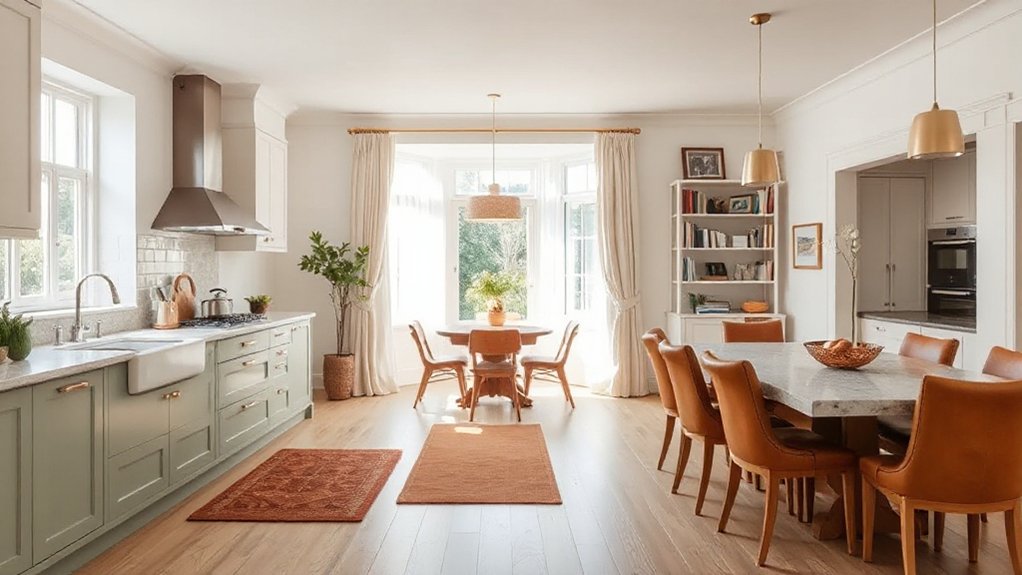
Because kitchens and dining rooms are often visually connected, you’ll get the best results by choosing colours based on two non-negotiables: light and flow. Start with lighting considerations: note window direction, shaded walls, and bulb temperature. North light mutes colour, so you’ll want cleaner, brighter hues; warm afternoon light can over-golden paint, so you’ll need cooler balance.
Next, map flow. Treat the two rooms as one palette, then shift intensity, not hue—deeper in the dining zone, lighter in the kitchen—so sightlines stay calm. Use Color psychology to steer mood: energising tones near prep areas, appetite-friendly warmth where you linger, and muted accents to reduce visual noise.
Test swatches in both rooms, morning to night.
Timeless Neutral Kitchen and Dining Room Colour Ideas
While bold colours can look amazing, timeless neutrals give your kitchen and dining room a cohesive, long-wearing foundation that won’t date when trends shift. Start with warm off-whites, soft greiges, and mushroom tones to keep spaces bright without feeling sterile.
Use Color psychology: creamy neutrals read welcoming and calm, while cooler taupes feel crisp and tailored. Layer depth through contrast—matte cabinetry with satin walls, pale stone counters with deeper grout, and blackened metal accents for definition.
Let Cultural influences guide undertones: warmer beiges often suit sunlit, Mediterranean-leaning homes; cooler neutrals can echo Scandinavian minimalism.
Keep one dominant neutral, one supporting shade, and one accent finish, so the kitchen and dining room flow beautifully, and stay flexible for future updates.
Green and Blue Kitchen and Dining Room Colour Ideas
If you want colour that feels fresh but still design-forward, green and blue deliver calm, confidence, and instant character in both kitchens and dining rooms.
Choose soft sage or olive when you want warmth that still reads modern; pick deep forest when you want a richer, grounded mood.
For blues, go smoky navy for tailored sophistication, or airy sky tones for brightness that doesn’t glare.
Keep it practical: test swatches under your task lighting and evening bulbs so the shade won’t swing too cold.
Pair green with oak, brass, or matte black hardware; pair blue with crisp white trim, stone, and warm metals.
For Eco friendly palettes, lean on mineral paints and nature-led pigments.
For Coastal inspired hues, add sand, rattan, and linen accents.
Modern Two-Tone Kitchen Colour Ideas (Cabinets + Walls)
To make a modern kitchen feel intentional without going monotone, lean into a two-tone scheme that splits cabinet colour from wall colour. Start with a grounded base: warm white or light greige walls keep daylight bouncing and let finishes shine.
Then choose Contrasting cabinet hues—think light uppers with mid-tone lowers, or a single colour on lowers paired with white uppers for clean definition. If you’ve got open shelving, match it to the wall so the room reads seamless.
For added structure, paint trim and doors in the wall tone but one step stronger. Consider accent wall options only where they support zoning: behind the dining nook, on a pantry run, or across a banquette wall.
Keep hardware consistent for polish.
Bold Dark Kitchen and Dining Room Colour Ideas (Moody Looks)
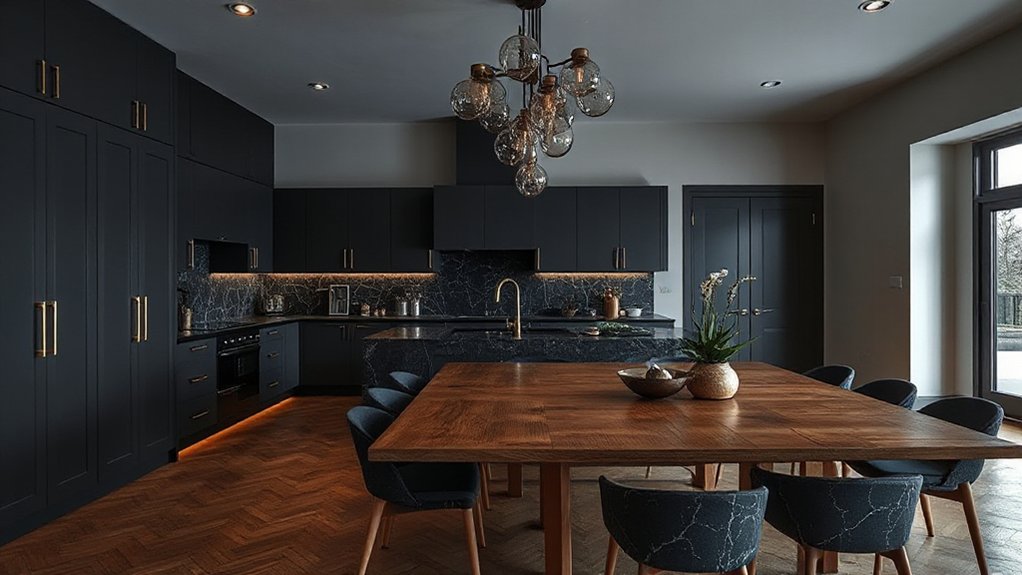
Two-tone schemes give you clean contrast, but going bold and dark delivers the kind of moody, high-end impact that instantly sharpens a kitchen-dining space. Choose deep charcoal, inky navy, or forest green on cabinetry or walls, then balance it with warm wood, veined stone, and brushed brass so the room doesn’t feel flat.
Use Accent wall ideas strategically: paint the dining nook wall matte black, or wrap a banquette in dark paint to define the zone without adding partitions. Keep ceilings and trims lighter to lift sightlines.
Dial in lighting color schemes next—warm 2700K bulbs soften dark paint, while layered pendants, under-cabinet LEDs, and dimmers prevent shadows on prep surfaces. Add reflective tiles or a satin finish for controlled sheen.
Conclusion
You’ve now got the “life-changing” secret to kitchen and dining room colour: pick a palette that actually lives with you. Start with warm off-whites, greiges, or mushroom to keep things timeless, then flirt responsibly with sage, olive, smoky navy, or sky blue for personality. Go two-tone if you want modern without chaos. If you’re craving drama, commit to moody darks—just don’t blame the paint when your lighting’s doing the sabotage.