
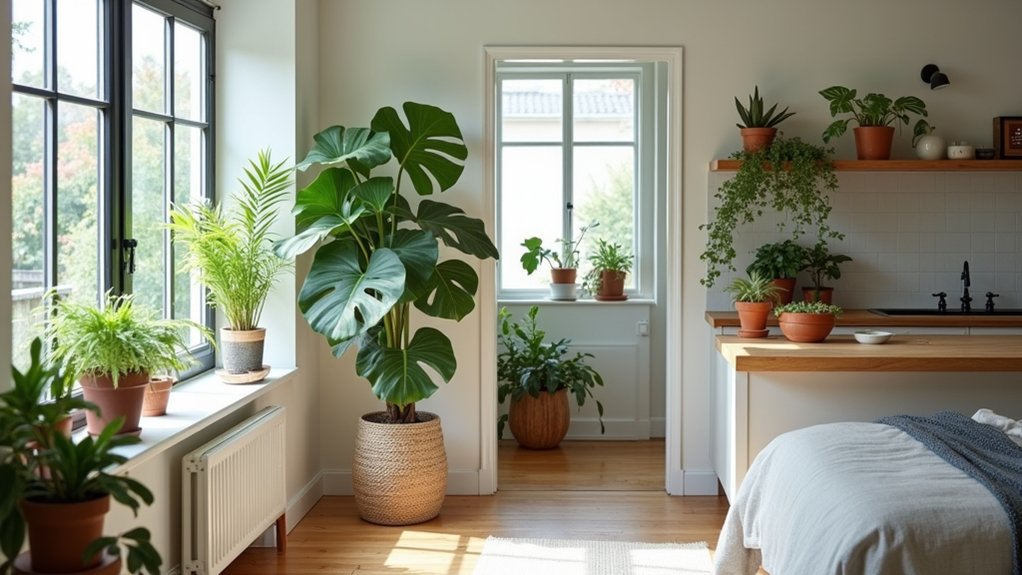

You’ll get the best-looking plant styling when you start with light, not trends. Walk each room, note window direction, and decide where plants can live without blocking airflow or daily routines. Then you can layer heights with floor plants, stands, and hangers, and choose pots that echo your finishes—ceramic, metal, or woven fiber. The key is grouping with intention, because one mistake can make a space feel cluttered…
Start With Your Light (Then Pick Plants)
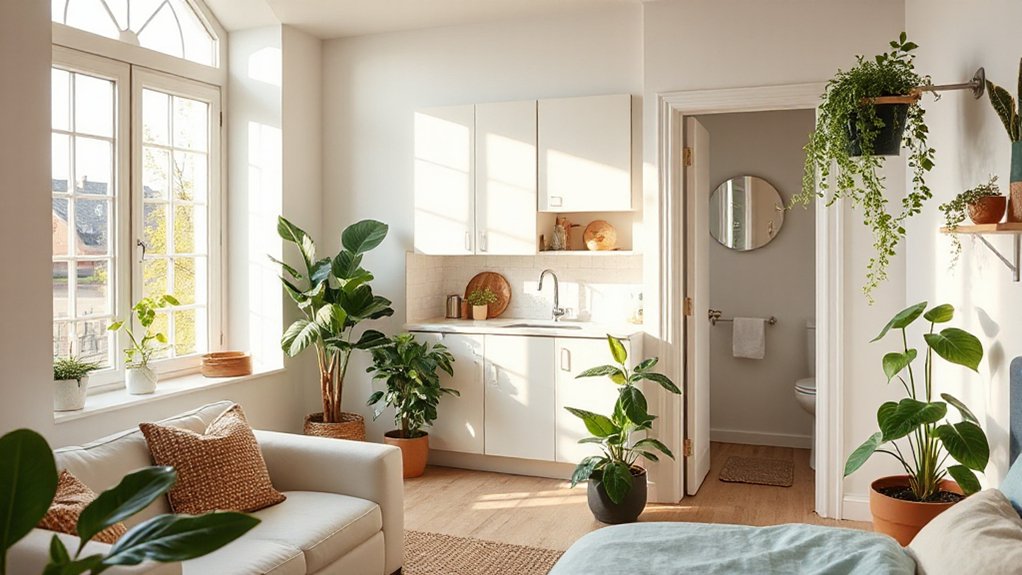
Before you buy a single plant, map your home’s light—because it dictates what’ll actually thrive. Track lighting conditions for a full day: note window direction, obstructions, overhangs, and seasonal shifts. Measure distance from glass in feet; light drops fast after 2–3 feet. Watch for harsh midday beams that scorch leaves, and for dim corners that only look bright.
Then plan plant placement like you’d plan furniture. Group plants where light and traffic align, and keep pathways clear of spill-prone pots. Use reflective surfaces and pale walls to bounce light, and rotate containers weekly for even growth.
If you rely on lamps, pick high-output LEDs and set consistent timers. Document results, then adjust positions—don’t guess.
Best Plants for Low, Medium, and Bright Light
Match your plant to your light level, and you’ll get healthier growth with less maintenance.
For low light, you can rely on proven favorites that stay lush in dim corners.
For medium light, choose picks that balance steady growth with easy care.
If you’ve got bright light, go for sun-loving options that reward you with faster growth and bolder, on-trend foliage.
Low-Light Plant Favorites
Even if your home doesn’t get much direct sun, you can still create a lush, styled look with plants that thrive on indirect light and forgiving care routines. For Low light corners, choose shade tolerant classics like snake plant, ZZ plant, pothos, and cast-iron plant; they read sculptural and modern in matte ceramic planters. Tuck them on shelves, in entryways, or beside a sofa to soften hard lines without chasing sunbeams.
Nail plant care by matching pots to roots: use drainage holes and a gritty mix to prevent soggy soil. Follow simple watering tips—wait until the top inches dry, then water thoroughly and empty saucers. Rotate monthly for even growth, and dust leaves to keep them glossy.
Skip fertilizer unless growth resumes in spring.
Medium-Light Plant Picks
Once you’ve nailed low-light staples, medium light opens up a bigger, more design-forward plant roster—think bright, indirect sun near an east window or a few feet back from a south or west exposure.
Reach for pothos, philodendron, and monstera adansonii for fast, architectural growth and strong air purification, especially in living rooms and home offices. Style them in matte ceramic planters or elevated stands to keep foliage at eye level and off crowded surfaces.
If you want pet friendly plants, choose spider plant, peperomia, or parlor palm; they’ll handle medium light without drama.
Rotate pots weekly for even symmetry, and water only when the top inch dries. Feed lightly in spring and summer to maintain crisp color.
Bright-Light Plant Options
When you’ve got bright, direct-leaning light—think a south or west window with a few hours of sun—you can treat plants like sculptural décor and push for bigger color and faster growth.
Choose sun-loving classics: fiddle-leaf fig for bold architecture, rubber plant for glossy Sunlit foliage, and bird of paradise if you want resort-scale drama.
For compact, on-trend Bright greenery, add succulents, aloe, or a ponytail palm on a pedestal.
If rays are intense, filter with a sheer to prevent scorch on tender leaves, and rotate pots weekly for even form.
Water only when the top inches dry; bright light speeds uptake, but soggy soil still rots roots.
Use a chunky, fast-draining mix and a cachepot for polish.
Layer Plants With Stands, Hangers, and Floors
Although a single plant can look polished on its own, layering greenery at different heights makes your space feel intentional and designer-led. Start by anchoring the room with a tall floor plant in a corner to frame sightlines and soften hard edges.
Then build a mid-level tier with plant stands beside sofas, consoles, or bed nightstands so leaves sit near eye level without crowding surfaces. Add hanging planters near windows or over unused corners to pull the gaze upward and free floor space—keep them clear of door swings and HVAC vents.
Finish with low growers on the floor, under benches, or beside media units to create a grounded, gallery-like cluster. Vary leaf size and silhouette, but repeat one plant type to keep the composition cohesive.
Match Pots and Planters to Your Decor Style
Layering plants sets the structure, but the pots and planters decide whether the arrangement reads “styled” or scattered. Start by matching pot style to your room’s materials: matte ceramic for modern minimalism, warm terracotta for Mediterranean or boho, ribbed stoneware for Scandinavian, and aged brass or blackened metal for industrial.
Echo existing finishes—oak, walnut, chrome, or linen—so the plant feels integrated, not appended.
Use color coordination like a designer: pull one tone from your palette (wall paint, rug, art) and repeat it in planters, then add one controlled contrast for edge.
In small rooms, stay within a tight neutral range to reduce visual noise; in eclectic spaces, commit to bold glazes or patterned cachepots, but keep the silhouette consistent.
Group Plants Neatly: 3 Rules That Work
To group houseplants neatly, you need a clear anchor—one statement plant or vessel that sets the visual center.
Then you’ll keep it modern by varying height and texture, pairing upright silhouettes with trailing forms and mixing glossy, matte, and fine foliage.
Finish with consistent spacing so the cluster reads intentional, not cluttered, whether it’s on a console, shelf, or windowsill.
Choose A Clear Anchor
When you group houseplants, a clear anchor keeps the arrangement from reading as visual clutter. Pick one “lead” element that visually grounds everything: a substantial floor planter, a tray on a console, or a low bowl on a coffee table.
Place the anchor first, then cluster the remaining pots tight to it so the group reads as one intentional vignette, not scattered singles. Match finishes to your room’s metals and woods for a current, curated look.
Let the anchor support plant care: choose something with drainage control, a saucer, or a liner that protects surfaces.
Add decorative accents sparingly—one candle, a small stack of books, or a sculptural object—so greenery stays primary and the styling feels edited.
Vary Height And Texture
Even if you keep your pots tightly clustered, you’ll still need height and texture contrast to make the grouping look designed rather than flat. Start with your anchor plant, then add one taller, vertical option—like a snake plant, dracaena, or narrow ficus—to create a clean skyline.
Balance it with a mid-height mounding plant, such as peperomia or pilea, to soften the silhouette. Finish with a lower, trailing accent—pothos, heartleaf philodendron, or string of turtles—to pull the eye downward and add movement.
Aim for varied heights that read like a deliberate trio, not a lineup. Prioritize textured foliage: ribbed leaves, glossy ovals, or feathery fronds. Keep pots cohesive, but let the plants do the styling work.
Keep Spacing Consistent
Although your plants can mix sizes and leaf shapes, the spacing between them needs to look intentional, not accidental. Use three rules to keep groupings crisp.
First, set a repeatable gap: 2–3 inches between small pots, 4–6 inches for medium, and 8–12 inches for floor plants, so the cluster reads as one styled moment.
Second, align containers to an invisible grid—front edges even on shelves, or centered on trays—to create clean negative space that feels current.
Third, leave a “breathing lane” for plant care: you should reach soil, rotate pots, and wipe leaves without rearranging everything.
Consistent spacing also improves airflow, helping indoor gardening stay healthier and less pest-prone.
Style Plants in the Living Room
Because the living room anchors your home’s daily rhythm, you’ll get the best impact by styling houseplants like intentional decor. Start with a “hero” plant—fiddle leaf fig, rubber tree, or olive—in a corner that needs height, then layer medium and trailing plants on consoles and shelves.
Repeat plant color to reinforce your palette: deep greens for calm, burgundy for drama, variegation to echo patterned textiles. Match container materials to your finishes—ribbed ceramic with stone, warm terracotta with wood, brushed metal with modern lighting—and keep pot shapes consistent for a curated look.
Use plant stands to align canopies at eye level, and group in threes for a gallery-like vignette. Leave negative space so foliage reads intentional, not cluttered.
Add Plants to the Kitchen (Without Mess)
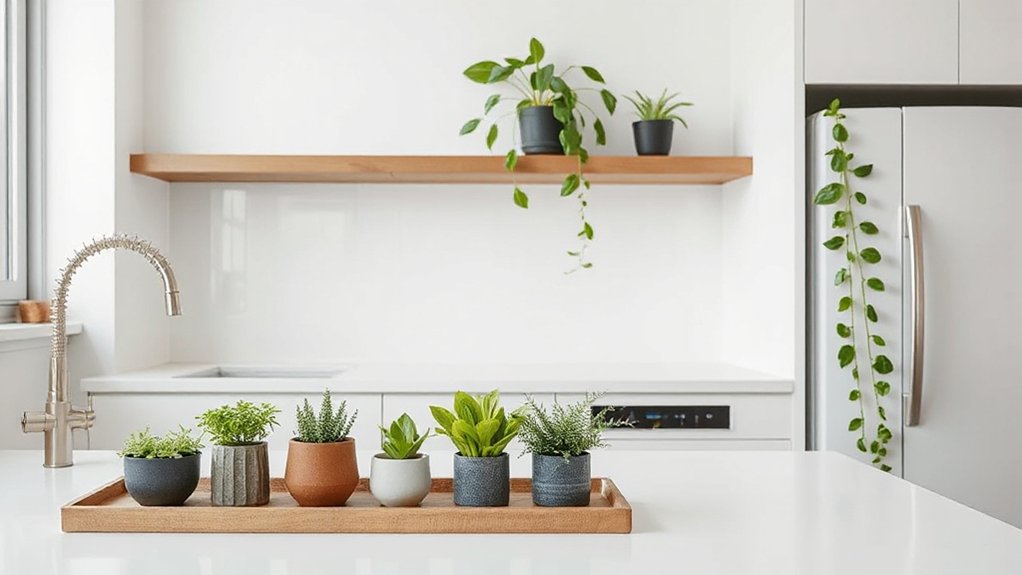
In the kitchen, you’ll want low-mess countertop greens that stay compact, stable, and easy to wipe around.
You can free up prep space with a wall-mounted herb station—think slim rails, labeled pots, and proper light placement for steady growth.
To keep everything clean, you’ll rely on drip-free watering solutions like self-watering planters, capillary mats, and narrow-spout watering cans that control every pour.
Low-Mess Countertop Greens
When you want a fresher, more styled kitchen without adding cleanup to your routine, low-mess countertop greens deliver the look with minimal fuss. Choose compact, contained plants like pothos in self-watering planters, ZZ in a cachepot with a liner, or a small snake plant that tolerates heat and low light.
Keep them away from splatter zones and direct burner heat; a bright corner near, not on, a windowsill looks current and protects leaves.
Lock in simple watering schedules: check moisture weekly, water only when the top inch is dry, and dump excess from saucers immediately.
For pest prevention, wipe foliage monthly, inspect new plants before placing them out, and avoid overwatering that attracts gnats.
Rotate pots so growth stays balanced.
Wall-Mounted Herb Stations
Countertop greens keep things tidy, but a wall-mounted herb station frees up prep space and brings fresh flavor within arm’s reach—without turning your kitchen into a soil zone. Mount a slim rail system or pegboard near natural light, then clip on matching pots for a clean, boutique look.
Choose compact, high-use herbs—basil, thyme, chives, mint—and keep each label visible for quick grabs while you cook. For a cohesive Herb garden, repeat one pot finish (matte white, terracotta, or black) and align heights for a deliberate grid.
You’ll simplify plant maintenance by using a light, well-draining mix and top-dressing with small stones to reduce spillover when you snip. Rotate pots weekly so growth stays even and photogenic.
Drip-Free Watering Solutions
How do you keep kitchen plants thriving without chasing water rings and muddy drips across your counters? Start by pairing every pot with a fitted saucer and a hidden capillary mat; it wicks excess water back as roots drink.
For a sleeker look, drop nursery pots into cachepots with a moisture barrier, then water in the sink and return them after draining. If you travel or forget, install self-watering planters or simple wick-based watering systems; they deliver steady moisture and reduce salt buildup.
Keep a narrow-spout bottle for targeted pours, and add a cheap moisture meter to standardize plant maintenance. Finish with a washable tray under grouped plants to catch the occasional splash.
Use Plants to Calm the Bedroom
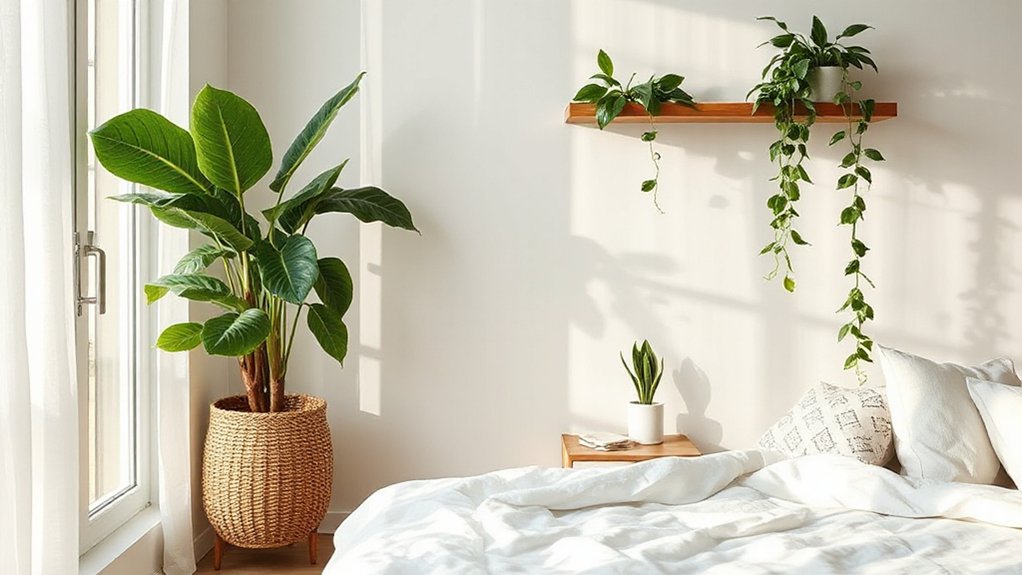
Although your bedroom should feel like a retreat, harsh lighting and bare corners can make it read as clinical rather than calming—houseplants fix that fast.
Start with Plant therapy: place a medium snake plant or ZZ on the dresser to add height without visual noise, and tuck a pothos on a high shelf so vines soften hard lines.
For calming foliage, choose matte, deep-green leaves over spiky silhouettes, and keep the palette tight—one to three varieties reads curated.
Use a ceramic pot in warm white or sand to echo bedding and reduce contrast.
Angle a small grow light on a timer toward the wall for indirect glow.
Cluster two plants by the nightstand to balance lamps and anchor the room.
Choose Humidity-Loving Bathroom Plants
Once you’ve dialed in a restful bedroom, let your bathroom carry that same lived-in, spa feel by leaning into plants that love warm, steamy air. Treat it like a microclimate: consistent humidity, fluctuating temps, and often low light.
Choose humidity plants such as ferns, pothos, philodendron, spider plants, and peace lilies; they tolerate splashes and rebound fast. If you’ve got a bright window, add an orchid or a small monstera for a current, hotel-bath vibe.
Place pots on a shelf away from direct shower spray, or hang a trailing plant near the mirror to frame your sink. Use cachepots with drainage, empty saucers weekly, and rotate plants so bathroom greenery grows evenly instead of leaning.
Set Up Plants for a Better Home Office
Whether you work from a spare room or a corner desk, plants can make your home office feel calmer and more polished while quietly improving the air around you. Place a medium plant at eye level near your monitor to soften glare, and tuck a trailing pothos on a shelf for vertical interest.
Choose low-fuss performers like ZZ plant, snake plant, or philodendron if your light is inconsistent; add a small desk succulent only if you get strong sun.
Keep a propagation station—test tubes or a slim vase—to rotate cuttings and refresh your styling through Plant propagation.
For pest prevention, quarantine new plants for two weeks, wipe leaves weekly, and use yellow sticky traps to catch fungus gnats early.
Conclusion
When you decorate with houseplants in every room, you’re not just styling—you’re tuning your home’s mood and function. Start with the light, then layer heights with stands and hangers, keep pots consistent with your decor, and group plants in tidy clusters. Add tough, low-mess picks in the kitchen, calming greens in the bedroom, and humidity lovers in the bath. NASA reports some houseplants can reduce indoor VOCs by up to 87% in 24 hours.