
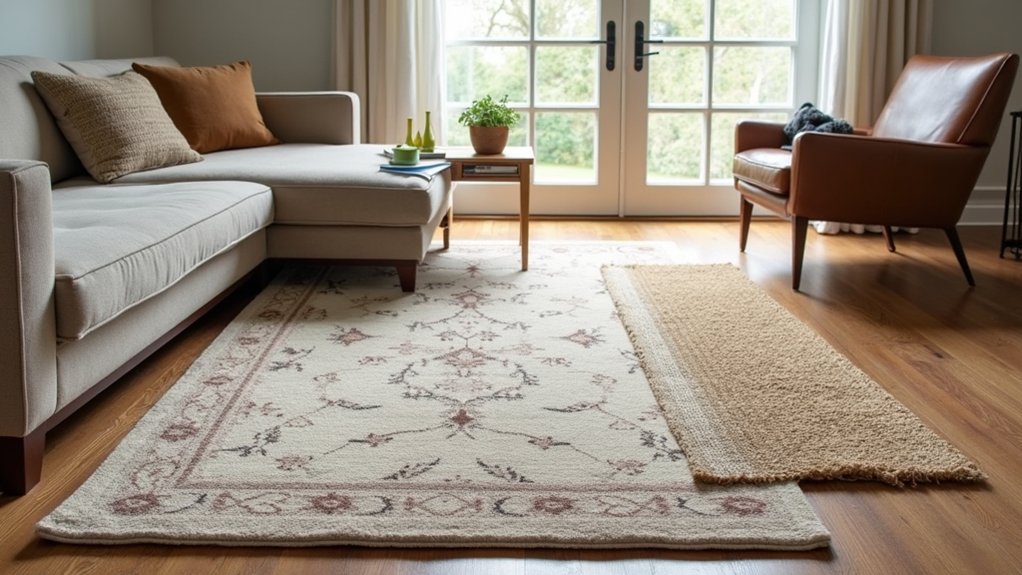

You can’t pick a rug by looks alone—you need the right size, placement, and material to make the room feel intentional. Start by measuring the footprint, mapping furniture legs, and confirming clear walkways so nothing floats or feels cramped. Then match fiber and pile height to real life: pets, spills, doors, and dining chairs. Color and pattern should echo your palette without competing. Next, you’ll see the room-by-room sizing rules that prevent expensive mistakes.
How to Choose a Rug Size (By Room)
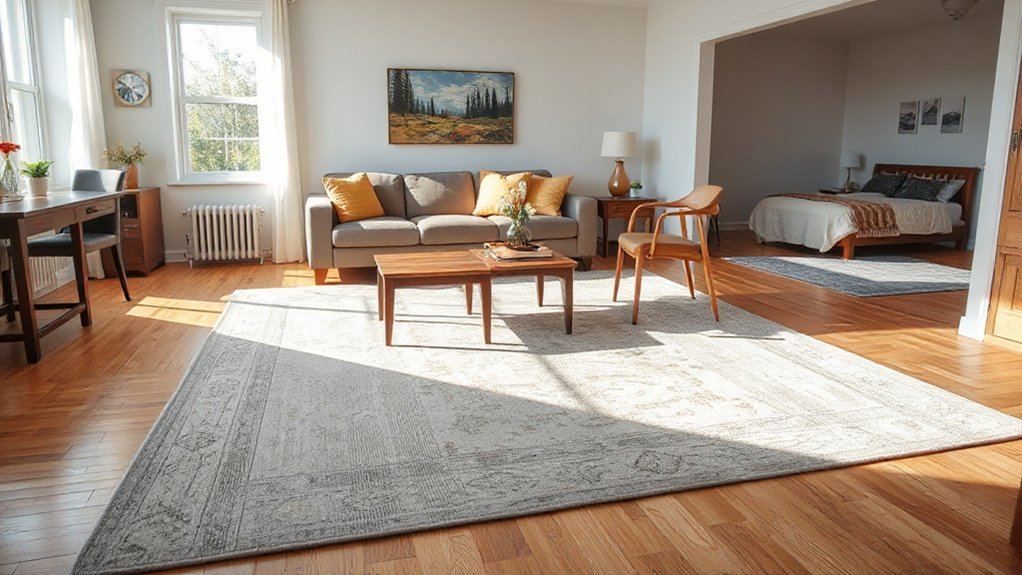
Three measurements decide whether a rug looks intentional or improvised: your room’s footprint, your furniture layout, and the clearances you need at doors and walkways.
In living rooms, size up so the rug visually anchors the seating zone; leave a consistent border of exposed floor to frame it.
In bedrooms, choose a rug that extends beyond the bed’s sides and foot for warm step-down space.
In dining rooms, go large enough that chairs stay on the rug when pulled out; measure the pull-back distance.
In hallways, run a long runner with even margins and non-slip backing.
For Rug layering, start with a larger neutral base, then add a smaller accent.
For Seasonal rug swapping, keep sizes consistent so updates don’t disrupt circulation.
Place Furniture on Rugs the Right Way
Because the way your furniture meets the rug sets the room’s visual “rules,” you need to commit to a placement plan instead of letting legs land wherever they happen to fit.
In living rooms, anchor the main seating: place front legs of the sofa and chairs on the rug, or go fully on for a luxe, hotel-like look—just keep at least 6–12 inches of rug visible beyond the pieces. Center the rug under the coffee table and align it with the room’s primary sightline.
In dining areas, pull chairs out and ensure all legs stay on the rug.
In bedrooms, slide the rug under the lower two-thirds of the bed.
Want Layering textures? Use rug layering techniques: a flatweave base with a smaller patterned rug on top.
Best Rug Materials for Pets, Kids, and Spills
If your home sees muddy paws, sticky fingers, or the occasional toppled drink, your rug material needs to work as hard as your furniture layout. Choose solution-dyed nylon or polypropylene for high-traffic rooms: they resist stains, dry fast, and clean with mild soap and water.
For a more elevated look, pick performance polyester with built-in stain resistance and a softer hand.
If you prefer natural style, wool stays resilient, disguises soil, and naturally repels liquid briefly, giving you time to blot.
For Eco friendly fibers, consider recycled PET or tightly woven jute blends—just spot-clean quickly and avoid soaking.
Need hypoallergenic options? Go for low-shed synthetics or flatwoven cotton you can wash, and add a rug pad to reduce dust drift.
Choose Rug Pile Height for Doors and Dining Chairs
Durable fibers handle messes, but pile height decides whether your rug works smoothly with the way you move through a room. For door clearance, measure the gap under the door and subtract 1/4 inch; choose a low-pile or flatweave if the swing is tight, or plan to trim the door instead of forcing a plush rug.
In hallways and entries, low pile also reduces edge curl and trip risk.
For dining chair clearance, your rug must let chairs glide without snagging. Aim for low-pile (about 1/4 inch) or a firm, tightly woven cut pile; avoid high-shag that grabs chair legs and traps crumbs.
Pair thicker rugs with a smooth rug pad to stabilize while keeping movement easy and quiet.
Pick Rug Colors and Patterns That Won’t Clash
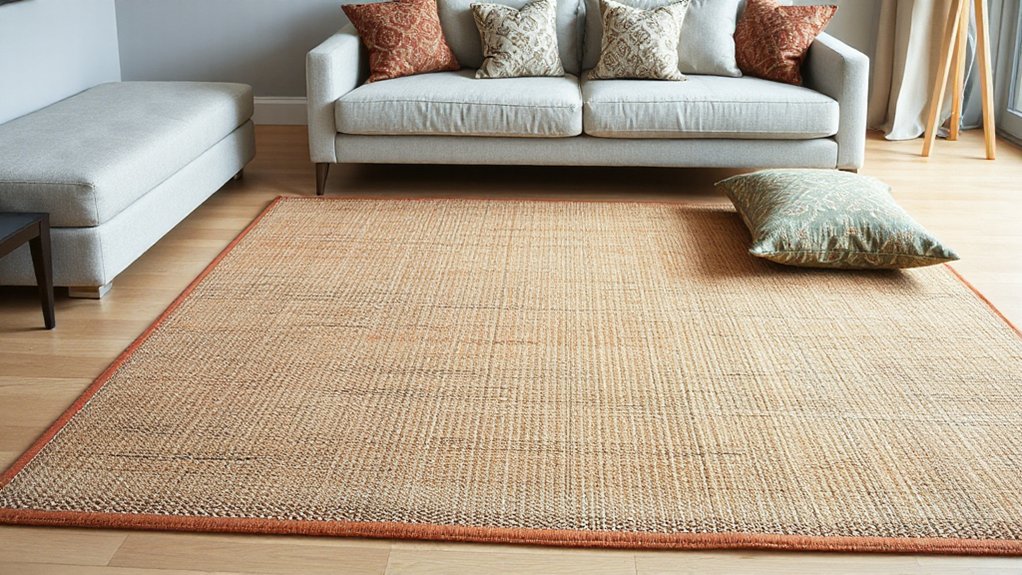
Start by matching the rug to your existing palette—pull two or three tones already in your walls, upholstery, or art so the room reads intentional, not chaotic.
Then balance pattern scale: if your furniture or drapery runs busy, choose a larger, simplified motif (or vice versa) to keep today’s layered look polished.
When you’re unsure, use a neutral anchor like ivory, greige, charcoal, or natural jute to connect finishes and let accent colors do the talking.
Match Existing Color Palette
Although you can fall in love with a rug on its own, it has to play well with the colors already doing the heavy lifting in your room. Start by identifying your dominant hue (sofa, wall, or drapes), then pull one supporting shade and one accent from existing textiles or art. That trio keeps Color harmony intentional instead of accidental.
For modern, trend-forward spaces, choose rugs that echo undertones: pair warm woods with rust, clay, or cream; balance cool grays with slate, ink, or sage.
If your room already has high-contrast elements, pick a rug with softened versions of those shades to prevent visual noise. Use pattern coordination by repeating one key color in the rug and another in pillows, throws, or trim.
Balance Pattern Scale
When you’ve already got stripes, florals, or geometrics in play, the rug’s pattern scale becomes the make-or-break detail that keeps the room from looking busy. Start by inventorying what’s dominant: if your sofa or drapes wear a large motif, choose a rug with a tighter, smaller repeat or a subtle tonal variation for Scale balancing.
If your upholstery reads mostly solid but your pillows are lively, you can go bolder on the floor with a larger, graphic medallion. For Pattern mixing, aim for contrast in size, not just style: pair big with small, and keep medium-on-medium to a minimum.
Check the pattern from standing height and across the room—if it blurs, it’s too fine.
Use Neutral Anchors
Once you’ve balanced pattern scale, lock the room together with a neutral rug that acts like a visual anchor instead of another competing print. You’ll calm busy furnishings and give your art, pillows, and drapery room to breathe.
Stick to neutral color schemes—ivory, greige, warm taupe, stone, charcoal—then fine-tune undertones to match your floors and major upholstery. If you’ve got cool gray walls, choose ash or slate; if your woods skew honey or walnut, pick oatmeal or camel.
Add texture, not chaos: low-contrast stripes, heathered weaves, subtle geometrics, or tone-on-tone borders read modern without clashing. These choices offer versatile design options, so you can swap accent colors seasonally without replacing the rug.
Rug Pads, Cleaning, and Durability for High-Traffic Areas
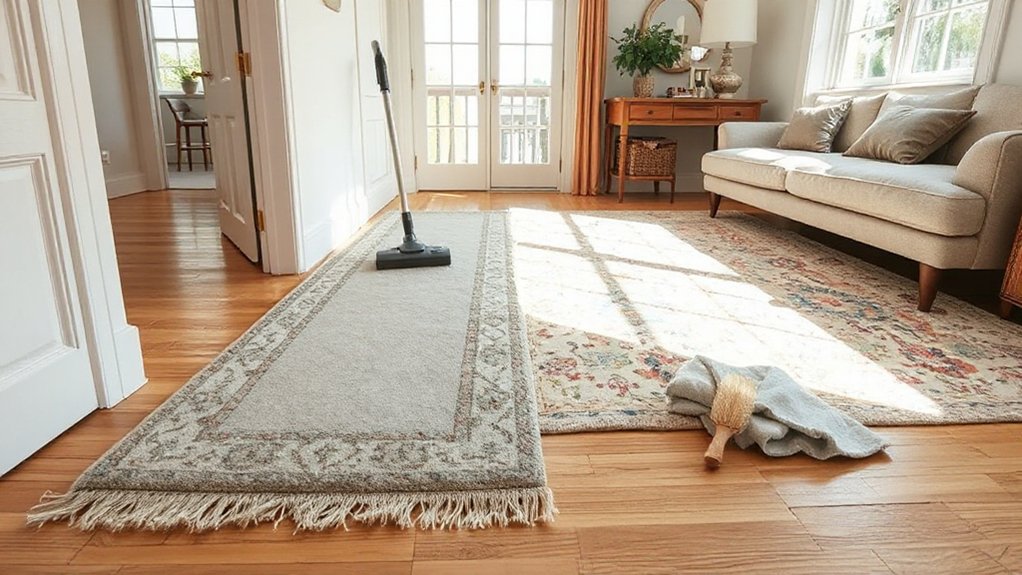
If you’re placing a rug where feet, pets, and chair legs constantly pass, treat the pad and maintenance plan as part of the purchase—not an afterthought. Rug pads grip the floor, prevent curling, and reduce fiber crush; choose felt+rubber for hard floors, dense felt for carpet-on-carpet, and keep thickness under 1/4 inch so doors clear.
Match pad size to the rug, not the room, and trim cleanly.
For durability, favor low-pile wool, solution-dyed nylon, or indoor/outdoor polypropylene; they hide grit and bounce back.
Commit to smart Rug cleaning: vacuum weekly (no beater bar on fringes), blot spills immediately, and rotate quarterly to even wear.
Schedule professional cleaning annually in busy zones.
Conclusion
You don’t have to guess: the “bigger rug always looks better” theory only holds when it anchors key furniture and preserves clear walkways. Test it—tape your ideal rug outline on the floor and watch how the room’s proportions snap into place or fall apart. Then lock in performance: choose stain-resistant fibers for busy zones, a pile height that clears doors and dining chairs, and a pad that stops slipping and extends wear.