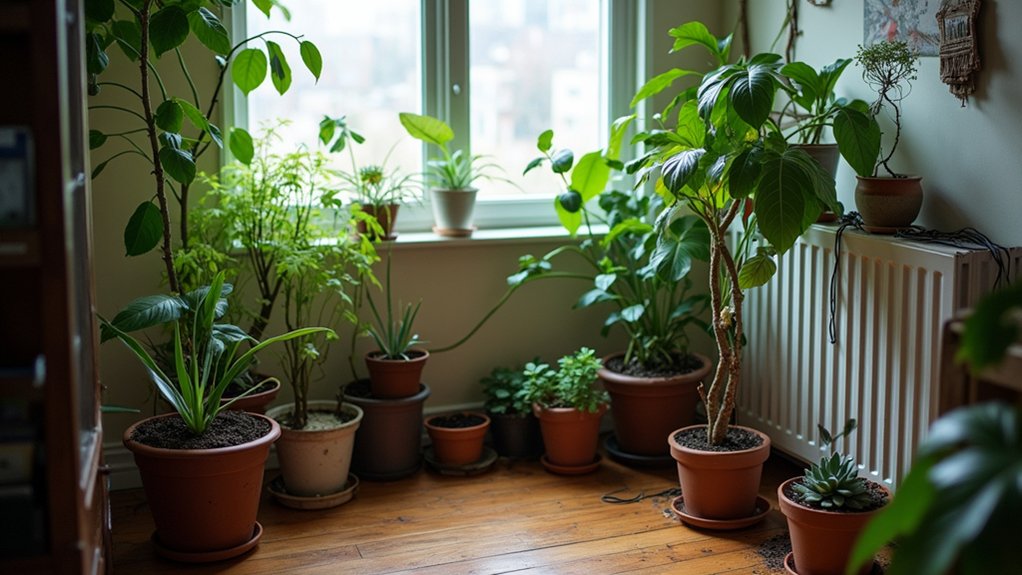

If your plants look “off” or keep struggling, it’s usually a styling mistake, not bad luck. You might be crowding pots so air can’t move, choosing foliage that doesn’t match your window light, or using containers that fight the plant’s scale. Straight-line setups and even-number groupings can also make the whole display feel stiff. Fixing it starts with a few quick checks—and one of them surprises most people.
Check Light First, Then Choose the Right Plants
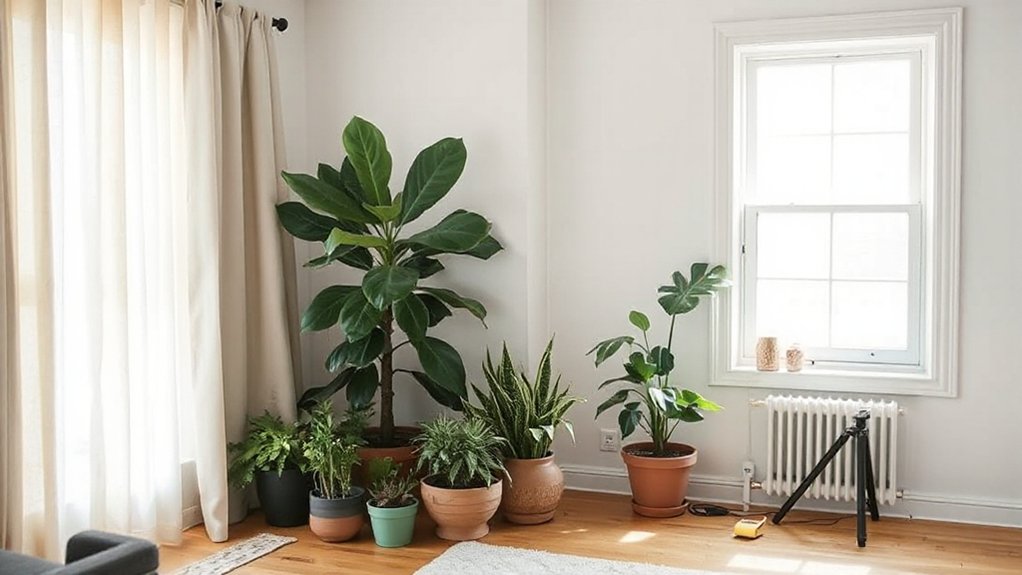
Before you buy a single plant, assess the light in the exact spot where it’ll live—because “bright” in your mind might be low light in reality. Check natural lighting at the same time of day you’re usually home, and note window direction, overhangs, blinds, and nearby buildings.
Then measure distance from the glass: light drops fast after a few feet. Use your hand-shadow test at noon; crisp edges mean high light, soft edges mean medium, barely visible means low.
Match plants to that result, not to wishful styling. Rotate pots weekly so growth stays even, and keep leaves off cold panes or heat vents. If plant placement is fixed, choose species that tolerate it instead of forcing supplements.
Pick a Plant Size That Fits the Spot
Once you’ve matched a plant to the light you actually have, size becomes the next make-or-break detail. For plant placement, measure the footprint and height clearance, then leave breathing room for growth and airflow.
A tall plant in a tight corner will scrape walls and block switches; a tiny plant on a wide console will look lost. Match scale to the furniture: choose plants that fill about one-third to one-half of the surface height they sit near.
Container selection changes the final size, so factor in pot diameter, rim thickness, and saucer space. Keep heavy pots off flimsy shelves, and avoid oversized pots that hold excess wet soil.
If in doubt, size down and elevate with a stand.
Use Odd-Number Groupings (Not Straight Lines)
Although a neat row of identical plants might feel “organized,” it usually reads flat and stiff in a room, so group in odd numbers—three or five—so the arrangement looks intentional and dynamic.
Place one plant slightly forward, one back, and vary container heights to create a clean triangle, not a straight line. Keep grouping symmetry loose: aim for visual balance, not mirror-image duplication.
Repeat one trait across the set—pot material, foliage tone, or leaf shape—so it holds together without looking matched. Use color coordination to prevent chaos: echo a single accent color in pots or top-dressings, and keep the rest neutral.
Leave a bit of negative space between plants so each silhouette stays readable.
Match Plant Scale to Furniture and Wall Height
You can’t fix a room with plants if the plant and pot scale fights your furniture—match widths and visual weight so a pot doesn’t dwarf a side table or look lost on a console.
Size the plant’s height to your wall height and nearby pieces, using taller floor plants to break up blank vertical space and shorter plants to sit below artwork or shelving lines.
When scale is right, your grouping reads intentional, not like mismatched leftovers.
Balance Plant And Pot Size
One simple rule keeps houseplants from looking awkward: scale the plant and pot to the furniture and wall height around them. If the pot’s too small, you’ll fight constant tipping, dry-outs, and stalled Root growth. Too large, and the plant looks lost while soil stays wet.
Choose a pot that visually anchors the plant: the container should feel heavier than the foliage, not the other way around. For floor plants beside sofas or consoles, use a wider base for Pot stability, and add a cachepot or weighted saucer if the plant’s top-heavy.
For tabletop plants, don’t exceed about one-third the table’s depth, and leave breathing room for books and lamps. Repot gradually—one size up—to keep proportions and care on track.
Fit Height To Walls
When the plant’s height doesn’t relate to the wall and furniture around it, the whole arrangement reads either stunted or overpowering.
Anchor scale first: beside a sofa or credenza, aim for a plant that reaches 2/3 to 3/4 of the furniture’s height, including the pot. In corners, let taller plants rise to about 1/2 to 2/3 of the ceiling height to fill vertical space without crowding it.
Use the wall as your measuring stick. Against a dark wall color, choose a slightly taller, airier silhouette so it doesn’t disappear; against light walls, avoid spindly stems that look unfinished.
If the plant’s too short, lift it with a sturdy stand; if it’s too tall, step it back or prune to a stronger line.
Upgrade Pots: and Hide Ugly Saucers
Although the plant gets all the attention, the pot and saucer do most of the visual heavy lifting—so treat them like part of the decor, not an afterthought.
Start with Stylish pot upgrades: choose a pot that matches your room’s finishes (matte black, warm terracotta, glazed white) and is sized to the nursery pot with 1/2–1 inch clearance.
If you’ve got a plastic grow pot, drop it into a cachepot for a cleaner silhouette and easier watering.
For Concealing unsightly saucers, skip flimsy clear trays. Use a pot with an integrated drip tray, or place a fitted metal or ceramic saucer inside a larger decorative dish so runoff stays hidden.
Add felt pads underneath to protect surfaces and prevent scratching.
Add Height, Layers, and Breathing Room
Where most houseplant setups go wrong is in the silhouette: everything sits at the same height, packed into the same corner, and the eye has nowhere to rest. Fix it by building Vertical layering: place one tall plant on the floor, a mid-height plant on a stand, and a small plant on a shelf or side table.
Vary pot diameters, too, so the arrangement doesn’t read like a row of duplicates.
Then create Spatial breathing. Leave a few inches between pots, and keep at least one clear surface nearby so the display feels intentional, not cluttered. Use a riser, stack of books, or slim pedestal to lift smaller plants without widening the footprint.
Finally, angle leaves outward and rotate pots so shapes don’t collide.
Group Plants by Care Needs to Keep Them Thriving
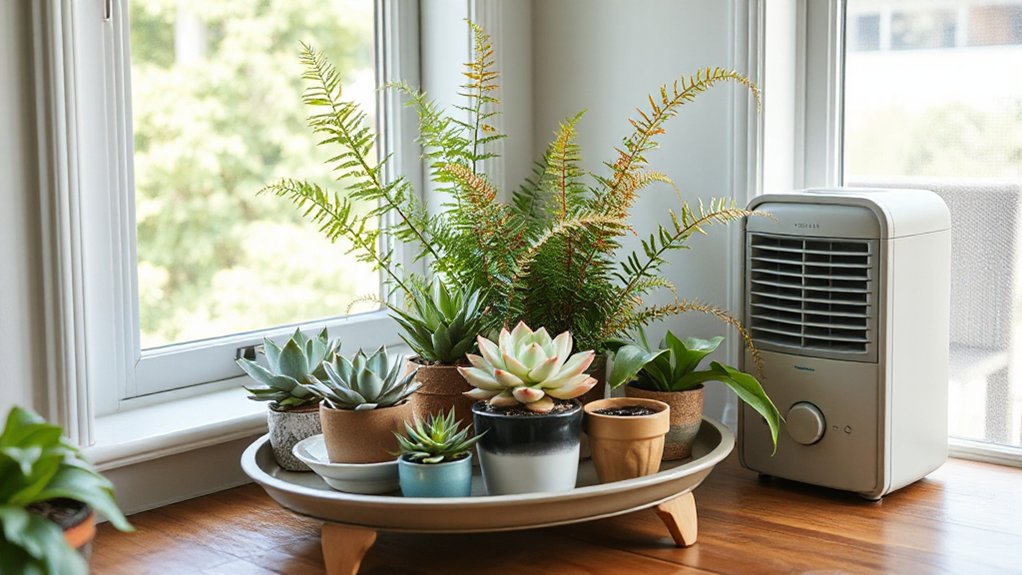
Even if you’ve nailed the layout, mixing plants with conflicting light and watering needs in the same cluster sets you up for constant guesswork and preventable decline. Use Plant grouping to simplify routines: place drought-tolerant plants (snake plant, ZZ, succulents) together in bright-to-medium light, and keep them on a slower watering schedule.
Cluster thirstier, fast-growing plants (ferns, calatheas, peace lilies) near indirect light and higher humidity so you can water consistently without drowning tougher species. Check Care compatibility before you style: match light range, soil moisture preference, and humidity tolerance.
Standardize potting mix within each group and use similar pot sizes to keep dry-down rates predictable. Label groups or set calendar reminders so maintenance stays automatic.
Conclusion
Skip the guesswork: check light, then choose plants that actually fit it. The payoff is real—NASA tests showed some common houseplants can cut certain indoor air pollutants by up to 87% in 24 hours under controlled conditions. But you only get benefits when plants stay healthy. Use odd-number groupings, vary height, and leave breathing room for airflow. Match pot and plant scale to furniture, hide saucers, and cluster by care needs.