
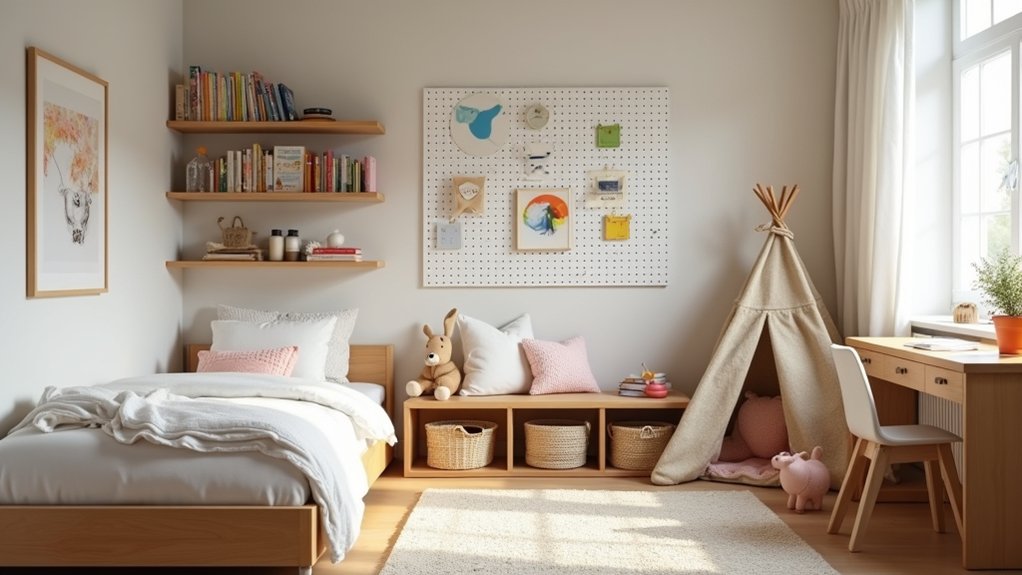

You want a kid’s room that sparks imagination but still runs smoothly day to day. Start by measuring the space and listing true must-haves, then map clear zones for sleep, play, study, and storage so everything has a home. Choose durable, adjustable pieces that can shift as your child grows, and use kid-level bins and labels to cut clutter fast. The tricky part is keeping it playful without turning it chaotic—and that’s where the next choices matter.
Measure the Room and List Must-Haves
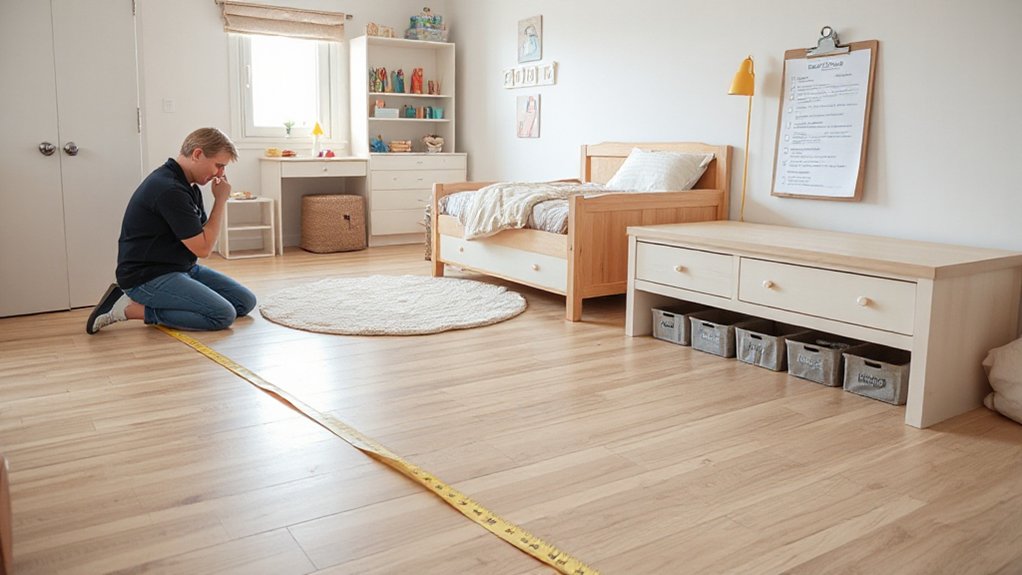
Before you buy a single piece of furniture, grab a tape measure and map the room’s real-world footprint—length, width, ceiling height, window and door placement, and any awkward bumps like radiators or closets—so you’re designing around facts, not vibes.
Sketch it to scale, then mark outlet locations, vent returns, and the swing of doors and closet panels so you don’t block access.
Next, list must-haves in priority order: bed size now and later, dresser capacity, a reading nook, and display space for books or art.
Decide what can flex, like a compact desk or fold-down table.
Plan wall real estate for Interactive wall decor without crowding windows.
Finally, choose themed storage solutions that match their interests while staying modular and easy to relabel.
Plan Zones: Sleep, Play, Study, and Storage
Once you’ve measured and prioritized your must-haves, break the room into clear zones—sleep, play, study, and storage—so every square foot has a job.
Anchor the sleep zone on the quietest wall, away from the door and active areas, and keep pathways open for night trips.
Place the play zone where daylight hits, leaving floor space for building and movement; use a washable rug to define it.
Set the study zone near an outlet and window for task lighting and charging, and keep supplies within reach to reduce clutter.
Build the storage zone around the perimeter with labeled bins and low shelves kids can access.
Add Creative decor like removable decals or a gallery rail, and follow safety considerations with rounded corners, secured wall items, and cord control.
Pick Grow-with-Them Furniture (Bed, Desk, Seating)
Because kids’ needs change faster than your budget, choose furniture that adjusts with them instead of resetting the room every few years. Start with a convertible crib that becomes a toddler bed, then a daybed; it keeps nursery essentials useful longer.
Prioritize toddler safety measures: low mattress height, rounded edges, and anchored frames, plus guardrails when you shift.
For school years, pick a height-adjustable desk with a tilting top and a chair with adjustable seat depth and foot support, so posture keeps up with growth spurts.
Add flexible seating—a small rocker that later reads as a lounge chair, or a pouf that doubles as a footrest.
Stick to durable, wipeable finishes and neutral silhouettes, then refresh the look with art and textiles instead.
Set Up Storage That Kids Can Actually Use
Set up storage at kid-height so your child can grab, stash, and tidy without help—think low, open cubbies and front-facing shelves.
Add clear labels (pictures for pre-readers) and simple sorting rules like “books,” “art,” and “dress-up” to keep resets fast.
Use flexible bins and adjustable shelving so the system can shift with new interests, seasonal swaps, and the inevitable toy rotation.
Low, Open Storage Options
Two smart shifts can make kid storage actually work: keep it low and keep it open. Choose open shelving that sits at kid height, so toys and books stay visible and within reach.
Skip tall dressers they can’t access; instead, use a short cubby, a low book ledge, or a bench with compartments. Slide in storage baskets that pull out easily, hold odd-shaped items, and tuck back in without fuss.
Keep heavy items on the bottom shelf to prevent tipping, and anchor units to the wall for safety. Use sturdy, wipeable materials—laminate, sealed wood, or powder-coated metal—so scuffs don’t become stress.
Leave one empty spot for quick resets after playtime.
Labeling And Easy Sorting
Low, open storage only stays tidy if everything has a clear “home,” so labeling and easy sorting do the heavy lifting. Use picture-plus-word labels at your child’s eye level: a block icon, a doll outline, a book spine. Choose bold, modern fonts and neutral label tape so it looks intentional, not classroom-cute.
For Toy organization, sort by type and play mode, not by brand—“build,” “pretend,” “art,” “games.” Keep categories broad so cleanup doesn’t stall. Add a simple color code (blue for building, green for art) across labels and tool caddies for quick matching.
Make Creative storage feel like decor: clip-on tags, mini chalk labels, or laminated cards on rings you can update as interests change. Do a five-minute reset nightly.
Flexible Bins And Shelves
Because kids clean up faster when storage matches how they play, choose flexible bins and shelving you can reconfigure without tools. Start with low, open cubes so they can see options and grab toys independently, then add bins that slide, stack, or clip in.
Use lightweight fabric boxes for plushies, clear bins for LEGO, and lidded tubs for “not today” sets. Keep a few empty bins ready so categories can change as interests shift—flexible storage beats fixed systems.
For shelf organization, reserve the top for parent-only items and display-style books, and keep daily-use bins at knee height. Add shelf dividers or bookends to stop slumping piles. Anchor tall shelves and leave floor space for play.
Choose a Calm Sleep Setup (Light, Sound, Bedding)
Where do you start when you want a kid’s room to feel playful by day but truly restful at night? Dial in light first: use dimmable, warm LEDs (2700K) and a plug-in night-light with an automatic sensor for safe midnight trips. Add blackout curtains or a layered shade to block early sun, and keep cords secured for child safety.
Next, manage sound with a compact white-noise machine or a fan set on low; place it across the room to avoid direct exposure.
For bedding, choose breathable, washable layers—organic cotton sheets, a lightweight duvet, and a seasonal blanket—made with eco-friendly materials.
Finish with a low-pile rug by the bed to soften steps and calm the space.
Create an In-Room Homework and Craft Station
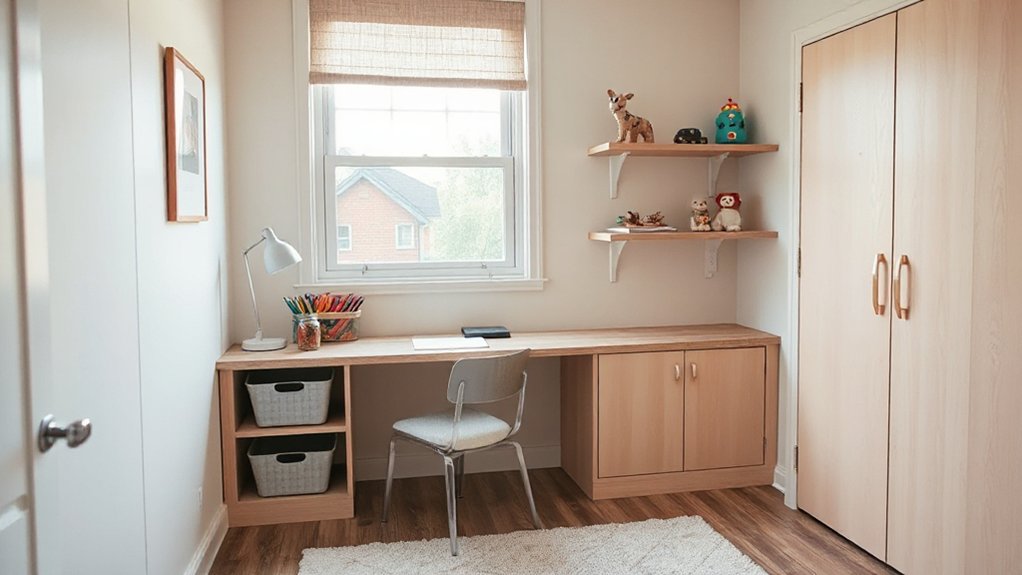
Once sleep is sorted, give daytime energy a home with an in-room homework and craft station that keeps supplies contained and distractions low. Place a compact desk or wall-mounted surface near outlets, and add an ergonomic chair or wobble stool for quick posture shifts.
Use a rolling cart with labeled bins for markers, glue, and homework folders, plus a lidded tray for “today’s” assignments. Mount a pegboard or rail system to hang scissors, rulers, and headphones, and keep cords clipped and tidy.
Build in sensory elements: a small fidget drawer, a textured desk mat, and a soft pinboard for touch-friendly notes. Finish with themed decor that matches their interests, but limit it to one focal zone. Keep.
Use Lighting and Color for Play + Focus
You’ll get a room that shifts from playtime to homework faster when you layer lighting by zone—overhead for general glow, a task lamp at the desk, and a soft night light for winding down.
Keep the main palette calm and focus-friendly (think warm whites, muted blues, or soft greens), then use color intentionally to support attention instead of overstimulating the space.
Add playful accent pops—pillows, wall decals, or a painted nook—to keep it kid-fun without sacrificing function.
Layered Lighting For Zones
Although a child’s room often has to do triple duty, layered lighting lets you define clear zones for play, focus, and wind-down without adding clutter. Start with dimmable overhead lighting on a wall switch so you can brighten the whole room fast, then soften it at bedtime.
Add a task lamp at the desk or craft table to reduce eye strain during homework and drawing; choose an LED with a shaded diffuser to cut glare.
In the play zone, use a low-heat floor or clip light aimed at shelves for easy cleanups.
For wind-down, mount a plug-in nightlight with a motion sensor near the bed.
Keep cords secured, use shatter-resistant bulbs, and anchor fixtures for toddler safety while matching finishes to modern nursery decor.
Color Palettes For Focus
If you want a room that supports both play and concentration, pair lighting with a tight, modern palette that tells the brain what to do. Start with warm white walls or a soft greige to keep visual noise low, then add one grounded anchor tone—ink navy, deep olive, or charcoal—on a desk wall or built-ins. Use matte finishes to cut glare and make task lighting feel cleaner.
Keep textiles and storage in quiet solids so toys don’t compete. Choose Interactive wall art in monochrome linework or muted graphics near the study zone, and reserve Themed decor accents for shelves, not the work surface.
Tie everything together with consistent undertones (cool with cool, warm with warm) so the room reads calm, intentional, and focus-ready.
Playful Accent Colors
When the base palette stays calm, playful accent colors can cue “play” without hijacking focus. Use color psychology: warm corals and sunny yellows energize, while teal and lavender keep things imaginative but steady.
Limit brights to 10–20% of the room—think bins, art rails, pillow covers, or a rug—so the desk zone still feels quiet.
Try an accent wall behind the play corner, not the bed or homework area. Choose a modern shape (arched block, half-wall stripe, or checker) to look current without overwhelming.
Balance it with matte finishes to cut glare, and add dimmable layered lighting: bright task light at the desk, softer lamp near toys. You’ll get a room that shifts from focus to fun fast.
Add Personality Without the Clutter (Decor Rules)
To add personality without letting a child’s room tip into visual chaos, pick a few high-impact decor moves and give them clear boundaries. Start with Personalized wall art in a tight grid or one oversized piece, and keep frames in a single finish (light oak, black, or white) for a modern look.
Let Themed bedding carry the story—space, safari, ballet—but keep the palette to two core colors plus one accent so it doesn’t fight the walls.
Limit “cute” to one zone: a shelf styled with three objects, a single statement lamp, or one plush chair. Repeat shapes or motifs twice, then stop.
Use closed storage for extras, and leave 20% of surfaces empty to let the room breathe.
Refresh the Room on a Budget (Swaps That Matter)
Even with a tight budget, you can make a child’s room feel brand-new by swapping a few high-impact pieces rather than “redoing” everything. Start with textiles: a washable rug, new blackout curtains, and a bold duvet instantly reset the palette.
Next, update lighting with an LED flush-mount or plug-in sconce; choose warm dimmable bulbs for bedtime. Replace drawer pulls and add peel-and-stick wallpaper to a single wall or bookcase back for a trend-forward moment without commitment.
Lean on parent involvement: let your kid pick one color and one pattern, then you curate the rest.
Keep Safety considerations front and center—anchor furniture, hide cords, use rounded hardware, and choose low-VOC paints.
Finish with labeled bins and a rotating book display.
Conclusion
You’re building more than a room—you’re setting a small stage where your kid can rest, learn, and play. Measure first, then anchor each zone with grow-with-them pieces and storage they can reach. Keep the sleep corner calm with soft light and simple bedding, and give homework a dedicated perch. Let color and layered lighting act like traffic signals: green for play, amber for focus. Add personality sparingly, then refresh with smart swaps.