
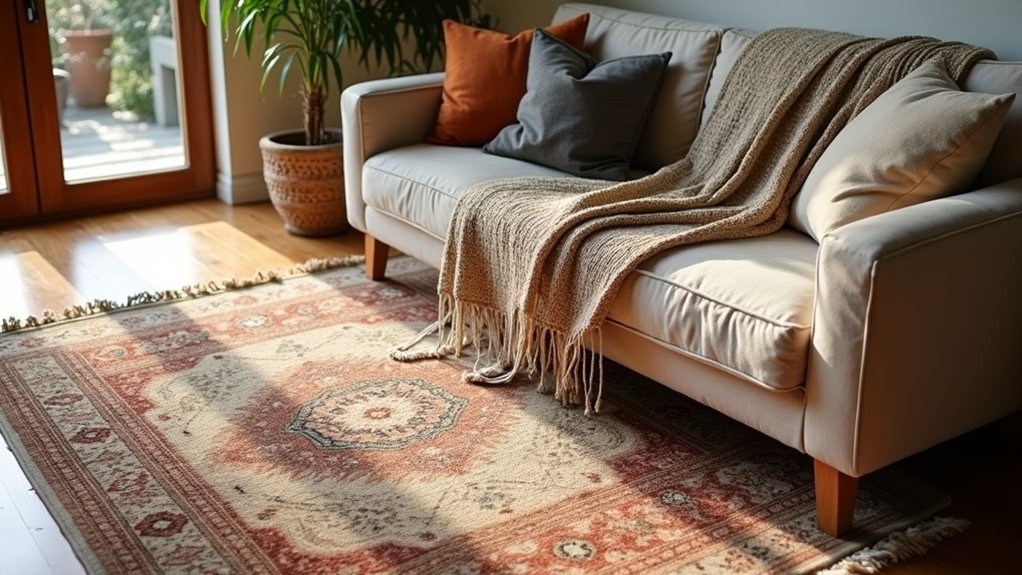

You can make a room feel instantly warmer by layering rugs and textiles with intent, not clutter. Start with a durable, neutral base rug that fits the main furniture footprint, then add a smaller patterned or textured rug to sharpen contrast and define a zone. Finish the look with cushions and throws in linen, velvet, or chunky knits for tactile depth. The key is knowing which combinations stay polished—and which ones tip messy…
Choose a Base Rug for Layering: Size, Material, Color
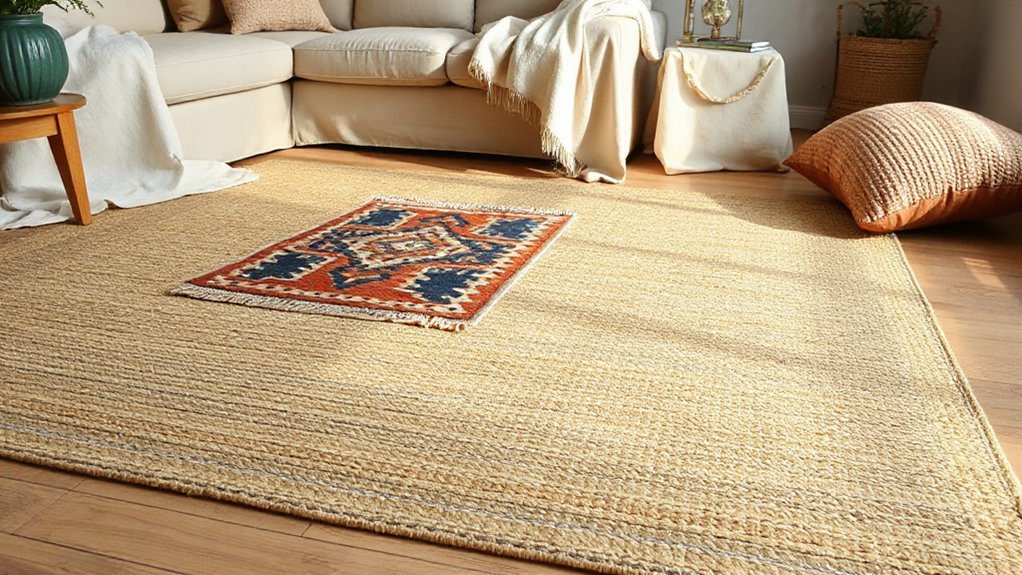
If you want your layered look to feel intentional rather than chaotic, start with a base rug that anchors the room in size, material, and color. Choose a rug that spans the primary furniture zone so it reads as the room’s foundation, not an afterthought.
For material, prioritize Rug durability: wool handles traffic and springs back, flatweaves suit busy households, and indoor-outdoor synthetics deliver a clean-lined, modern look with high stain resistance.
Then set your palette. Stick to grounded neutrals (oat, stone, camel) for flexibility, or pick a muted pattern that disguises wear and supports tonal layering.
Finally, plan Textile maintenance: check fiber care codes, select low-shed constructions, and match pile height to your vacuum and lifestyle needs.
Layer Rugs by Size, Placement, and Rug Pads
Once you’ve anchored the room with a base rug, build the layered look by scaling the top rug down and placing it with purpose. Aim for the top rug to sit 12–24 inches inside the base on all exposed sides, or align one edge under the sofa legs to create a clean, intentional line.
In dining areas, keep layers outside chair paths to prevent catching.
Manage rug thickness so doors swing freely and the connection feels seamless. Pair a lower-pile base with a slightly higher top rug for definition, but avoid extremes that cause rocking furniture.
Finish with rug pads: use a thin, grippy pad under the base, and a felt-plus-rubber pad under the top for stability, cushioning, and textile durability.
Mix Patterns When Layering Rugs (Simple Rules)
Although layering patterns can feel risky, you can make it look intentional by keeping one rug as the “quiet” anchor (solid, heathered, or a low-contrast micro-pattern) and letting the other carry the visual energy.
For Pattern mixing that reads modern, vary scale: pair a large-format motif (bold stripe, oversized geometric) with a tighter repeat (pin-dot, subtle herringbone). Keep a shared color thread—one dominant hue plus one accent—so the stack looks curated, not chaotic.
Balance contrast with material: combine flatweave under a plush pile or jute with wool to highlight Textile textures and add depth.
Finally, echo the room’s lines: angle patterns with furniture edges, and center the busier rug where you want focus.
Add Throws and Cushions to Cosy Up Seating
Patterned rugs set the visual rhythm underfoot; now bring that same layered intent up onto your seating with throws and cushions.
Start with a base cushion in a solid that echoes a rug tone, then add one patterned pillow that borrows a motif without matching it exactly—your Color coordination will feel considered, not contrived.
Next, vary Textile textures to add depth: pair linen or cotton with a chunky knit, velvet, or faux shearling. Drape a throw diagonally over the arm or back so it looks styled, not stored.
Keep fills plump and mix sizes (50×50 with a lumbar) to support posture and soften sharp sofa lines. Finish with one accent cushion in a warm, on-trend shade for lift.
Use Layered Rugs to Zone an Open-Plan Room
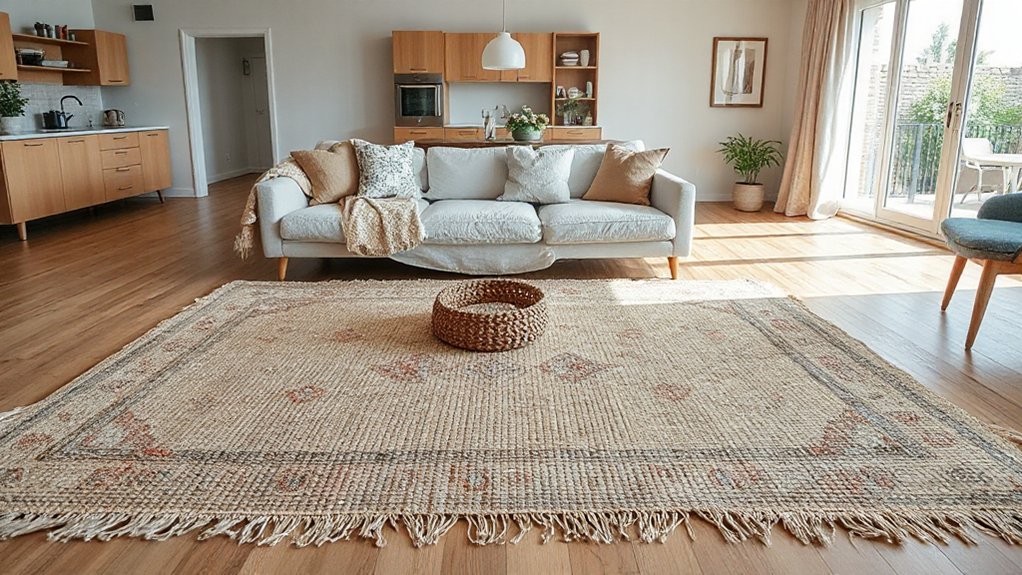
When you’re working with an open-plan layout, layered rugs let you carve out distinct zones—lounging, dining, and working—without adding visual barriers. Anchor each area with a larger, low-pile base rug, then top it with a smaller accent piece to signal function and add warmth underfoot.
Use Texture contrasts to create hierarchy: pair a flatweave with a plush wool or a jute base with a patterned vintage-style runner. Keep furniture coordination tight by aligning rug edges with key legs—front legs of the sofa on the lounge rug, dining chairs fully on the dining rug, and a desk centered on its layer.
Maintain consistent tones across zones, then vary scale and pattern to prevent a chopped-up look.
Conclusion
You’ve turned flat floors into a layered landscape: a durable, neutral base rug grounds the room, while smaller patterned pieces add punch against calm. You place rugs to steer traffic yet soften every step, using pads to keep plush piles tidy, not messy. You mix prints with restraint—one bold, one subtle—so it feels curated, not chaotic. Then you finish with linen throws and velvet cushions: crisp meets cosy, modern meets lived-in.