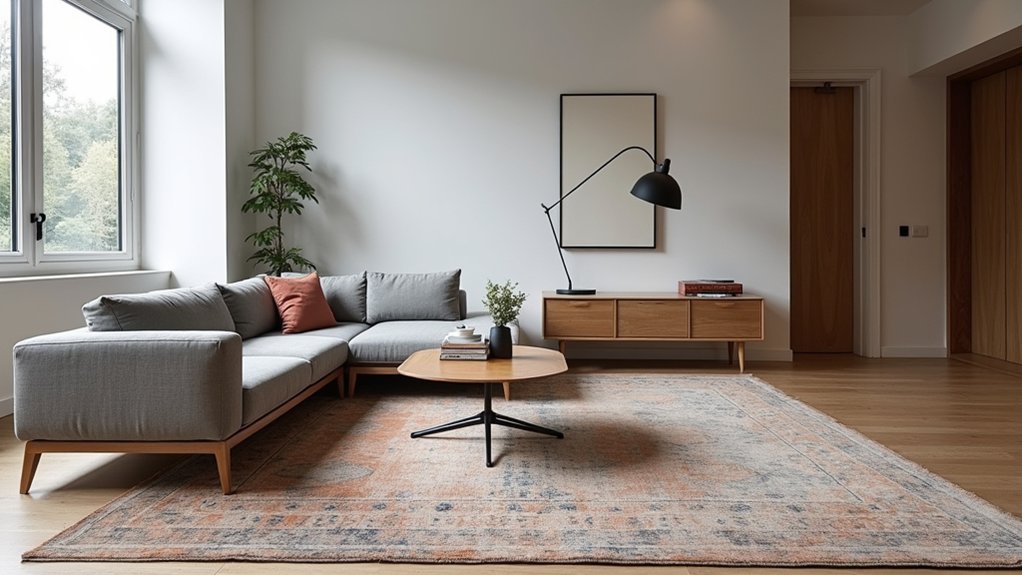

You’ll get the most modern look by treating the rug as a system: correct scale, low-profile pile, and materials that hold a clean edge. Start with neutrals like greige, ivory, or charcoal to keep the architecture in control, then choose what adds intent—geometric lines for contrast, high-low texture for depth, or a tonal distressed finish for quiet layering. The difference comes down to a few precise choices, and one of them usually surprises you.
Choose a Modern Rug: Size, Pile, Material, Color
Before you fall for a pattern or a trendy palette, lock in the specs that make a modern rug perform: size, pile, material, and color.
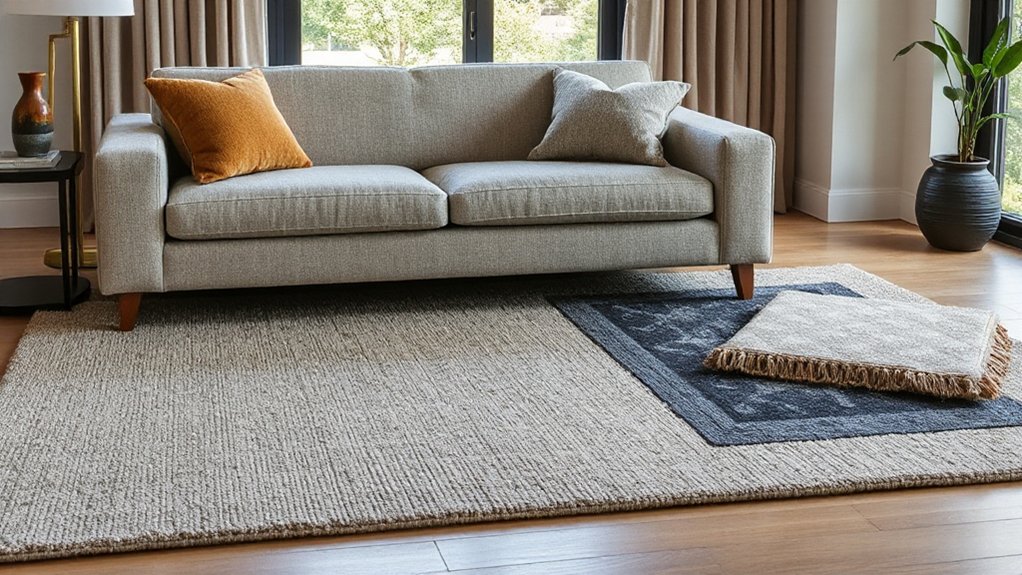
Start with rug placement: anchor front legs of seating on the rug, or go fully under for a gallery-like float; leave 6–12 inches of border to keep sightlines clean.
Choose pile by traffic—low pile or flatweave reads crisp and resists crushing; medium pile softens acoustics in open plans.
Specify fibers for function: wool balances resilience and stain resistance, nylon boosts durability, and PET handles sunlit rooms with colorfastness.
Let fiber patterns do the heavy lifting: heathered yarns and subtle ribbing hide wear while keeping a modern, engineered look.
Modern Rugs for Neutral, Minimalist Rooms
Although minimalist rooms lean quiet, the right modern rug gives them structure—defining zones, adding texture, and preventing a neutral palette from reading flat. Start with a controlled Color palette: warm ivories and greiges for softness, or cool stones and charcoals for a gallery feel.
Prioritize subtle, low-contrast patterning like heathered fields or tonal striations to hide wear without visual noise. For furniture coordination, match undertones to key surfaces—oak, walnut, concrete, or black metal—so the room reads intentional.
Choose tight loop or low-cut pile for crisp lines and easy maintenance; reserve plush for bedrooms only. Consider wool-viscose blends for quiet sheen, or flatweaves for thin profiles that clear doors. Size it to anchor primary seating.
Geometric Modern Rugs for Contrast and Statement
When you want a room to feel sharper and more intentional, a geometric modern rug delivers instant contrast without relying on loud color. You can use crisp lines, grids, and angled motifs to echo modern architecture and create a defined visual anchor under seating or a dining table.
Choose scale strategically: oversized shapes read contemporary and calm, while tighter repeats add energy and rhythm.
Abstract patterns work best when you balance them with clean furniture profiles and disciplined negative space. For maximum impact, commit to bold color combinations like black-ivory, ink-navy, or terracotta-sand, and repeat one rug tone in art or accessories.
Favor low-pile constructions for precision edges, easy vacuuming, and clear pattern registration. Place it square to walls for intentional geometry.
Textured Modern Area Rugs to Soften Sleek Spaces
As minimalist interiors lean harder into smooth planes and crisp edges, a textured modern area rug adds tactile depth that keeps the space from feeling clinical. You’ll get the best results with looped wool, cut-and-loop piles, or high-low weaves that catch light and mute echo on concrete or hardwood.
In open plans, choose a low-shed, medium pile to balance comfort with clean sightlines, and size it so front furniture legs anchor the seating zone.
For Layered rug arrangements, place a flatwoven base under a plush texture to control bulk and define circulation paths.
Follow Rug maintenance tips: vacuum with suction-only, rotate quarterly, blot spills immediately, and use a breathable pad to reduce compression and edge curl over time.
Distressed Modern Rugs for Subtle, Layered Depth
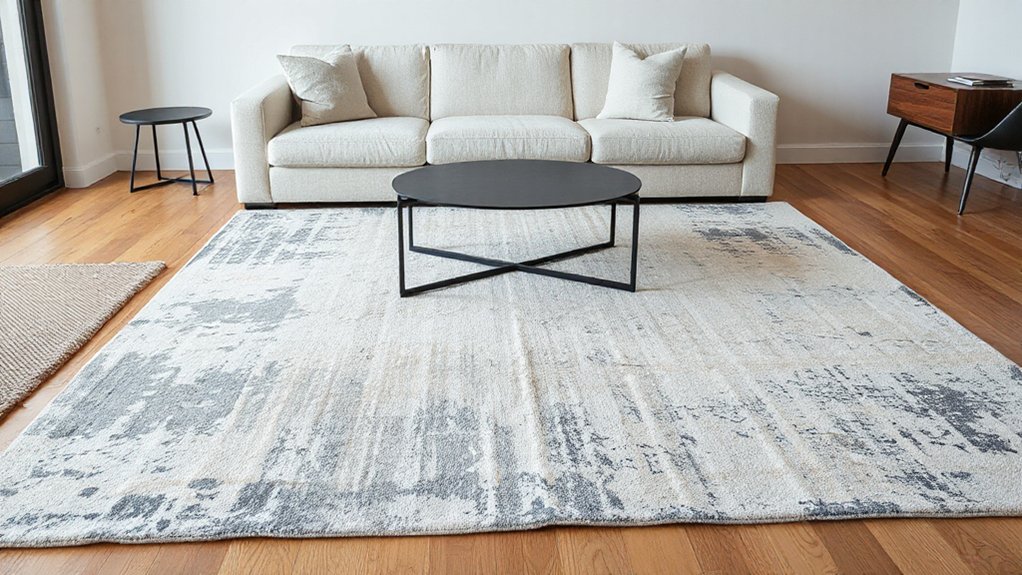
Even if your space reads ultra-clean, a distressed modern rug injects controlled visual noise that makes minimalist rooms feel lived-in without tipping into vintage clutter. You get depth through abrash-like tonal shifts, erased pattern fields, and low-contrast fading that breaks up large planes of stone, lacquer, or drywall.
Choose Vintage motifs that read graphic, not ornate, then let distressed finishes downshift contrast so your furniture edges stay crisp. You’ll want a tight pile or flatweave for a clean silhouette; reserve higher piles for acoustics, not “antique” effect.
Keep the palette anchored—charcoal, clay, oat, ink—and echo one rug tone in textiles to lock the layer. In open plans, scale up and run legs on the rug to avoid a floating island.
Conclusion
You’ve got more leverage in a modern room than you think: a well-sized, low-pile rug can visually anchor the seating zone and sharpen the layout’s geometry. In fact, surveys show about 58% of homeowners say area rugs make a space feel “finished”—even when the palette stays neutral. Stick to wool-blends or flatweaves, use tone-on-tone distressing for depth, and choose grids or high-low texture when you need controlled contrast without clutter.